Showing posts with label Torchwood. Show all posts

Bookmark and Share Torchwood: The Conspiracy

Thursday, September 17, 2015 - Reviewed by Marcus

Reviewed by Thomas Buxton
Torchwood - The Conspiracy (Credit: Big Finish) Torchwood: The Conspiracy
Wriiten by David Llewellyn
Directed by Scott Hancock
Starring: John Barrowman (Captain Jack); John Sessions (Wilson); Sarah Ovens (Kate); Dan Bottomley (Sam)
Released by Big Finish Productions - September 2015
“The twenty-first century is when everything changes – and Torchwood is ready.”

They’re not alone, either: echoing this memorable guiding mantra to a tee, Big Finish have spared no expense to ensure that the first instalment in their new series of Torchwood audio releases mirrors its televised source material, demonstrating just as much innovation, engaging storytelling and political layers as audiences could possibly hope for from a budding drama coming to the market in 2015. Indeed, where some of the studio’s recent titles like Jago & Litefoot and last month’s The Sixth Doctor – The Last Adventure justifiably kept one foot lodged firmly in the past so as to entice fans of their respective eras, The Conspiracy instead goes remarkably far out of its way to remind its listeners that it’s a modern beast through and through, not only via its aforementioned dramatic ambition but moreover its integration of contemporary social forums aplenty in an enviably seamless fashion. From pre-recorded voice messages to nifty Instagram posts to local radio interviews, the number of narrative elements which have been plucked straight from our present cultural stratosphere into this captivating opening instalment’s web beggar belief.

On the surface this renewed emphasis from Conspiracy’s honoured wright, David Llewellyn, on clearly establishing – or rather re-establishing in the case of the show’s considerable band of followers, although newcomers needn’t feel daunted about stepping aboard for the impressively accessible ride – his storyline’s setting as here and now mightn’t seem a particularly revolutionary contributory element, yet its effect on the overall listening experience couldn’t be more profound if it tried. One sequence in particular perfectly encapsulates its impact, in fact; as the ever-dedicated, ever-eternal Captain Jack Harkness investigates the seemingly innocuous ramblings of populist conspiracy theorist George Wilson regarding a seedy, seemingly omniscient organisation dubbed only “the Committee”, all the while relating his progress to the listeners and his teammates (none of whom are referenced directly beyond a single namecheck for Gwen Cooper, though we’re all but certainly looking at a pre-“Exit Wounds” mission here), he comes across an intrepid YouTube blogger who carries suspicious knowledge of the supposedly covert organisation based beneath Cardiff Bay. This chance encounter in turn prompts Jack to momentarily digress from his retelling of the day’s events in order to play us a subsequent clip from the budding reporter’s portfolio concerning Torchwood – a simple conceit to be sure, but one which works wonders in terms of revealing new, semi-paranoid layers to the construct in question, doubling the sense that we’re listening in on a fictional Earth near identical to our own, whilst only taking up a few moments of our time before we’re returned to Harkness’ ongoing interview-turned-interrogation of Wilson without so much as a hint of narrative disconnect. Insignificant as they may seem when viewed in isolation, it’s small moments such as this one which make all the difference with regards to the scribe’s valiant efforts to establish the latest franchise to have fallen into Big Finish’s lap as every bit as compelling a contender as its predecessors.

Had there not been an accomplished central cast ensemble present to back Llewellyn’s thoroughly contemporary script, however, all might have been nought; just look at how the original Cardiff-set TV drama’s lesser efforts such as “Cyberwoman” and “Sleeper” fared with viewers upon presenting them with scarcely memorable secondary performers, then in contrast at how the likes of Susan Brown and a certain Mr. Peter Capaldi elevated “Children of Earth” to previously unthinkable levels of gravitas with their work as Bridget Spears and her ultimately pathos-ridden employer just half a dozen short years ago. Enter John Barrowman, who – despite not having played the supposed “Face of Boe” on-screen since 2011’s divisive Miracle Day – steps back into the role of Jack as if not a day has passed since we last heard the ex-Time Agent’s charming voice, lending the entire production a characteristically jovial feel throughout. Regardless of whether he’s matching wits with Wilson’s marvellously sly daughter Kate (portrayed with delicious aplomb by Sarah Ovens), contemplating the need for answers in today’s world of alleged transparency with Wilson himself (prepare to be taken aback by John Sessions’ understated yet wholly believable take on what could easily have been a one-dimensional construct in the wrong vocal chords) or realising the consequences of his team’s increased publicity as his conversations with Dan Bottomley’s simultaneously intrusive and touchingly vulnerable reporter Sam Hallett take a turn for the deadly, the voice behind one of Doctor Who’s best-loved recurring heroes delivers to nothing less than an impeccable extent. Little wonder, then, that despite its relative lack of stakes-raising set-pieces, in contrast to recent instalments in Big Finish’s output such as the hugely underwhelming The Warehouse, The Conspiracy never seems poised to lose its audience’s attention, since Barrowman, Bottomley and company each bring such unrelenting energy to the table this time around.

Whilst we’re on the subject of individual commendations, let’s not forget the oft-overlooked yet undeniably sterling work done by everyone involved with the Torchwood range’s sound design behind-the-scenes. It’s one feat to yank across the audio effects used to depict the technologically brimming, almost sentient landscape of the team’s iconic Hub so as to strengthen the dominant sense that we’re very much bearing witness to a direct continuation of the original series here, yet to balance the volumes and background effects involved with rendering Jack’s narration, his past interactions with Wilson et al, the slightly distorted audio of videos recorded primarily for viewing on mobile devices and various other text-within-a-text scenarios takes true talent of the highest degree, talent which many devoted followers of all things Big Finish might argue (completely justifiably in this case, we should add) that only the Berkshire-based studio’s diligent band of technical wizards possesses. Indeed, given that this reviewer at times unashamedly favours literary evaluation which primarily critiques narrative and where relevant performances, it’s telling when an aesthetic or aural aspect catches his eye or ear, and in this instance, there’s certainly no getting around the extent to which the dramatic weight of the overall piece would suffer were we to remove the nameless geniuses whose invaluable work began after recording from the equation.

Now, chances are some readers have been sticking around this long in order to reach this critique’s inevitable “but…”, yet aside from the rather abrupt manner in which Llewellyn (no doubt hoping to allow his successors ample room to develop upon the Committee’s still largely ambiguous plans for Earth) brings his otherwise faultless tale to a close and the lack of much in the way of tangible character development for Jack beyond yet another unfortunate blast from his past, it’s astoundingly difficult to pinpoint much about which one can complain in any great substance here – an unexpected result indeed, particularly given how long Big Finish have already spent dabbling in the realms of audio storytelling to date. Then again, throughout its five or so years on air, Torchwood always dared to subvert expectations in the most spectacular fashion, and in this respect its stunning latest outing hasn’t let the side down in the slightest; quite to the contrary, The Conspiracy holds the even rarer honour of ranking, at least in this reviewer’s humble opinion, as one of the studio’s most thrilling, finely-paced, strongly performed and therefore satisfying works yet, or to summarise the situation in a more succinct manner:

This is when everything changes for audio storytelling – and we’re definitely ready to see what’s coming next.”

Bookmark and Share Torchwood: Exodus Code

Thursday, September 13, 2012 - Reviewed by Matt Hills

Written by John Barrowman and Carole E. Barrowman
BBC Books
UK Release - 13 September 2012
Available to purchase from Amazon UK
This review contains plot spoilers

Arguably, the greatest blessing of Torchwood is in danger of becoming a curse. I’m referring to Children of Earth – five episodes that pushed the TV show into a brave new world, and won it newfound international critical acclaim. And where Miracle Day seemed overly keen to repeat the CoE trick, this novel very much follows the same template yet again. It could almost be entitled Women of Earth; this time it’s women at locations around the globe who are affected by a mysterious madness which may have an alien origin. Like CoE, there’s an epic feel, and a historical precursor involving none other than Captain Jack Harkness. And like Miracle Day, the remnants of team Torchwood have a unique inside-track on exactly what’s happening. In line with its TV predecessors, there’s also a significant issue raised by fantastical events: patriarchal society’s reaction to an outbreak of ‘mad’ women. Captain Jack gets a lecture on the reactionary nature of presumed female “hysteria” (p.149), and mental health services are rapidly overwhelmed.

There must surely be a limit to the number of times that a CoE-style storyline can plausibly be mounted, and Exodus Code flirts with reaching this limit. No sooner has planet Earth put the Miracle behind it – seemingly carrying on without any real, lasting changes – then there’s another worldwide threat to contend with. What seemed format-breaking, edgy and energizing in the case of CoE now threatens to ossify constrictively into Torchwood’s latter-day format.

Exodus Code works best when it dares to innovate rather than when it’s slavishly aligned with recent TV incarnations. The introduction of “a Hub” (p.293) radically unlike the old Cardiff base is a clever, much-needed move, and has the potential to generate many more future stories. New team members are a little under-written, however, and few characters really come to life beyond the established gang of Gwen, Captain Jack, Rhys and Andy Davidson (all of whom are notably well captured). By contrast, Torchwood’s new fellow travellers seem more like a collection of gimmicks rather than rounded, fleshed-out people, although this may be a result of the breathless thriller genre that Exodus Code belongs to. For example, government adviser Alan Pride sounds like a fascinating figure, but we are only really told this via various info-dumps, rather than being shown Pride in action.

As might be expected from writers John and Carole E. Barrowman, there are some lovely nods to Torchwood continuity, whether it’s a mention of “Suzie”, discussion of morphic resonance, or the specific Torchwood kit that Gwen makes use of. And Rex Matheson even makes an appearance, ultimately amounting to little more than a guest cameo. Exodus Code ties back to Miracle Day in multiple, deft ways, though it’s hard to avoid inferring that The Powers That Be have placed Rex’s unusual status firmly off-limits. The same problem has dogged post-Miracle Day audios, leaving the odd feeling that these tales aren’t quite allowed to whole-heartedly continue Torchwood’s adventures.

Of course, a big part of this novel’s selling point lies with its authors. Captain Jack is especially well served throughout, returning to his omnisexual, zesty self after the detours of Miracle Day. There’s a real love and respect for Torchwood on show, as well as a beautifully unexpected nod to Sarah Jane Smith. Jack is pretty much rendered as Exodus Code’s central figure; Gwen doesn’t directly feature until roughly a quarter of the way into things.

The non-linear storytelling works effectively, even if events of the finale do become a little compressed and complicated. For instance, a clunky explanation on page 328 indicates that the scenario could probably have been more smoothly conveyed, though Gwen’s humorous response deflects any excess melodrama. And there are some compelling ideas woven around the title’s “code”, with the Barrowmans working unusual medical conditions, enigmatic designs, genetics, computer code and even artificial intelligence into the rich brew of thriller elements.

This page-turner revitalizes Torchwood by suggesting a possible way forward for the show, and by introducing a host of new characters who could be further developed in future. It’s just a shame that the consequences of Miracle Day seem so muted, particularly in terms of Rex’s character. John and Carole Barrowman are clearly gifted storytellers (both on this evidence and that of their earlier novel, Hollow Earth). I, for one, would welcome another Torchwood tale from the pair, perhaps something finally marking an exodus from the CoE code, and its gradually diminishing returns.

Bookmark and Share Torchwood: Miracle Day - The Blood Line

Thursday, September 15, 2011 - Reviewed by Chuck Foster


Torchwood: Miracle Day - The Blood Line
Written by Russell T Davies and Jane Espenson
Directed by Billy Gierhart
Broadcast on Starz - 9th September 2011
Broadcast on BBC1 - 15th September 2011
BBC Worldwide Productions
This review contains plot spoilers and is based on the UK preview of the episode.

A series finale generally takes two forms: the purpose of the first type is to wrap up the threads that make up the ongoing plot of that series; the second is to set up the cliffhanger of an ongoing series. In both cases, the aim is to reach a climax, with the former consolidating into the resolution, whilst the latter building up to leave you with the big reveal "to be continued" ...

So where does Miracle Day fit? The answer is a little unsatisfactory in both camps.

One storyline's solution was inevitable since day one of course - it was clear the Miracle would be resolved and everybody would return to mortality; however, it wasn't so clear how that resolution would be achieved, even by episode nine, and about all we could be certain of was that Jack would be involved in some way. Ultimately this was indeed the case, the Miracle is reversed and everything is back to as normal as it could be.

However, then we have another few minutes to spare, where we discover that the whole Miracle is a "trial run" and the Family are simply off to run their "Plan B". To me, this simply had the effect of cheapening the ten week run, cheapening the deaths of Vera and Esther, and generally ending up with the feeling that the whole plot was a waste of time.

But hey, this has suddenly moved us into cliffhanger territory, and lo and behold we get it in the form of Rex Matheson joining the immortality club courtesy of him actually having a useful purpose for once in the series, as Jack's blood bank earlier in the episode!

Before I go any further, let me just point out that though I found the resolution of Miracle Day generally disappointing, when watching I was perfectly gripped by the climax build-up, the way it was executed, and the ending truly was a WTF moment, so the episode accomplished its task as televisual entertainment in that respect!

Let's get my biggest gripe out of the way first - just why was Esther killed off? In Children of Earth, Ianto's death was an integral part of the storyline as Jack sees the person closest to him die, with him totally impotent to stop it from happening. But, whilst it is arguably an important part of the plot for Miracle Day to have Vera 'die' (and thus bring to light the true meaning of Category One - not that this mattered by the time we reached last week's episode), with Esther it was simply an arbitrary shooting by a secondary character, had no impact on the conclusion of the Blessing plot at all, and being she did survive after the Miracle ended, there was no actual need to kill her off at all! The funeral scene didn't actually bring anything more to the story, and Rex's discovery of Charlotte's duplicity could have been set anywhere. Instead, it just feels like killing a character off for the sake of it. Some reviewers have commented that this is "the Torchwood way" and that it wouldn't be the show if a main character wasn't killed off ... I don't agree at all - deaths happen, yes, but they should be intrinsic to the plot - there is a difference between someone dying in a noble way and simply being written out lazily like here.

That aside, all of the characters came to life in this episode in a way I wish they'd done so in previous episodes. Rex finally proved why he was in such an important position in the CIA, and the plan concocted by him and Esther to hide Jack's blood within him was inspired (though let's not dwell too much on the actual mechanics of transfusion and why the directors of 28 Days Later abandoned such a plan in that film!). The Family members we saw on screen seemed confident, competent and convinced in their plans, at least until the above revelation ended their grand scheme, and Jilly's mad enthusiasm for their cause and what she sees as salvation was captivating, and after my misgivings over her character in earlier weeks, I am actually happy she did survive the explosion in the end to come back another day.

And then we have Oswald. For a moment there I thought there was going to be a revelation about who/what Susie Cabina really was and why he had to catch and kill her - i.e. a secret that a tortured man had to hide even to his (original) death and had only just found a man from the future that he could confide in. But no, he was exactly how he had been portrayed, a thoroughly despicable child killer with no sense of remorse, and Jack took him down a peg when he said about the universe: "I wish you could see that Oswald ... cause then you'll know how small you've made your life". This later made for a strange juxtaposition between what Oswald might consider 'heroism' in his sacrifice at the end and his seeming wish for redemption through that act, versus his warped sense of purpose in wanted to continue his 'passion' for the hunt of Susie and her ilk echoing on as he is finally engulfed in mortality.

Then the Cooper clan and their loss of Geraint was sensitively handled, with Rhys for once coming across as a sympathetic person and not the "noisy hulk" he normally comes across as. And I was pleased to see Andy Davidson having his role to play, and also that his seemingly prophetic words at the start - "she'll be the death of me" - didn't come to fruition after all - phew!

The "she" of the last sentence was of course Gwen, and once again the interplay between her and Jack as their friendship is put to the limit was portrayed brilliantly by Eve and John; the foreshadowing of this was laid down in Immortal Sins, and seeing Gwen taking the responsibility of what would effectively be the death of her friend was one of the best scenes of the episode, if not the series. And as for that 'death' ... in some ways it would have been a brave move to have actually killed Jack outright, turning this act into a noble sacrifice to save the world (another "Doctor" trait he's picked up over the centuries - could you imagine the young dashing conman from The Empty Child doing such a thing?), but then again I would like to see further adventures with the mysterious time agent (like actually exploring why he has a two-year gap in his memories!) so I'm not so fussed about it!

Reading through the above, you're probably hard-pressed to work out why I wasn't so enamoured of the ending (Esther notwithstanding). Well, it isn't the characterisations that I had a problem with, it's more the actual plot threads and pointlessness of a number of them. Take, for instance, the big fuss in End of the Road as to how the Null Field panels from the Hub seemed to be so important to the resolution of Miracle Day, given their influence in the death of Angelo. Jack taking the alpha plate was seemingly signposted as vital to the resolution - but that's the last we hear of it! I thought the Soulless were to be important in some way (maybe as Oswald's followers) but they were just a one-episode wonder - in fact there are so many of these 'dead-end' signals in the show it could almost have been ten separate episodes with a common thread to lead to the finale (like "Bad Wolf") rather than an integrated progressive storyline leading to the resolution.

And the Blessing itself is still something that almost broke my suspension of disbelief in the series. As a concept it was an interesting idea, but this was basically a re-hash of the Gaia principle (though I suspect the CGI renderers took the idea of "Mother Earth" a little too literally in their representation of the Blessing on screen, ahem!), and the sci-fi trapping of a hole through the diameter of the Earth was written off with a simple "we don't know" when Jilly asks the question we're all wondering at home - where's the lava?!! Jack makes a comment about it being it being "the gap in between" and then off into a load of Doctor Who Silurian/Racnoss pseudo-explanation that Gwen quite rightly says "you don't bloody know, do you?". A clever thing might have been to make this related to the rift in Cardiff and making the end point Campbell Island (that's no worse than Shanghai and Buenos Aires, if a little less glamorous!) and that would have tied in nicely with the Null Field, but alas it was not to be. So we end up with a strange natural phenomenon that was dug up, fed with Jack's immortal blood until it went doo-lally, but fixed with something around just 16 pints of Jack's now mortal blood!

Not wishing to end on a low note, there were other highlights to the episode, like the lovely scene with the shop owner in Shanghai comforting Gwen after she found the Blessing, Oswald calling Gwen magnificent, Gwen and Jilly's fight in the lift, and of course that brilliant moment when Shapiro discovers who the traitor in their midst really is - his singular response is one that almost steals the episode for itself!


All-in-all, this is a series that I haven't actually disliked, but just haven't been able to totally enjoy either. It's had some really good moments, but also some downright boring ones, too (I'll look at the overall series itself in a future post). For The Blood Line itself, though it has some really frustrating plot elements, overall I enjoyed it on viewing and feel this is one of the strongest episodes of the series.

And as the finale, quite right too!


Okay, I confess, I am still frustrated at Esther's wasted opportunity to have further adventures with Jack!!!

Bookmark and Share Torchwood: Miracle Day - The Gathering

Friday, September 09, 2011 - Reviewed by Chuck Foster


Torchwood: Miracle Day - The Gathering
Written by John Fay
Directed by Guy Ferland
Broadcast on Starz - 2nd September 2011
Broadcast on BBC1 - 8th September 2011
BBC Worldwide Productions
This review contains plot spoilers and is based on the UK broadcast of the episode.

With just one episode to go one might expect that the various plot strands would coalesce into a coherent direction leading to a grand finale ... but at the end of The Gathering I'm still not entirely sure what it is all about ...

The Blessing: is it a creation constructed by the Three Families from Jack's essence, a naturally occurring part of the planet that has been discovered and harnessed, a living entity that has been manipulated, or something else entirely? It certainly felt like a nod to Douglas Adams and the Total Perspective Vortex! (Not to mention appearing as a euphemism for Mother Earth?!!)

Why do the Families want Jilly to "write history"? There's already been one reference to such an idea - with the Trickster Brigade subplot from Immortal Sins of altering events in the Second World War - so maybe it's attempt number two (though again what has this to do with Jack, unless he's just the catalyst).

Why was Oswald built up by the Families, just to seemingly be dropped right in it at the turn of a hat (well punch) last week? This week he revealed just how manipulative he can be in the way he handled the Cooper household, so is there a further revelation yet to come? He did have that meeting which hasn't been clarified yet in Dead of Night, after all.

Anyway, I imagine this is all going to resolved in The Blood Line ...

As for the episode itself, like last week it was an unfathomably intriguing and engrossing fifty minutes of television in spite of the lack of momentum exhibited, though some scenes again seemed a bit drawn out (and again only a couple of principal settings). There was a genuine level of fear and frustration over the ruthless and strangely unemotional investigation of Finch, but I really hope that Geraint's fate is resolved positively as otherwise that whole liberation and concealment is just another plot cul-de-sac that has been used simply to exploit the audience's emotions.

Character-wise, it must certainly have preyed on Gwen's mind, otherwise why on earth would she have been so stupid as to pull off her face mask during her ram-raid of the pharmacy? Yes, I know this is to demonstrate that it is her there, but I suspect us viewers would be able to work that out easily enough as she spoke to the passerby and she could easily have dumped the mask as she jogged away afterwards.

Rex was in "intelligent" mode again today, though it seemed to me that Charlotte was blatantly behaving suspiciously - I honestly thought the business with the digital version of the short story was a deliberate trap by Rex as he'd compare versions to see if it was tampered with, but I guess I was giving him too much credit there!

Oswald and Esther continue to be the the focal interest in the show for me. Though I fully expected Bill Pullman to feature strongly, I never suspected that Alexa Havins would be the shining light in the series (I would have placed more money on that being Lauren Ambrose in the lead-up). As I've said previously, I really hope that she outlives Miracle Day - though we're used to the minimal survival rate of popular characters in Torchwood. (My hopes of her and Jack partnering up are still simmering away!)

All-in-all, this episode continues the trend of the better episodes for me, so I have high hopes for the finale. But ... a hole running the diameter of the Earth between Shanghai and Buenos Aires, possibly the biggest piece of hokum this series has ever produced?!!!

Preview: The Blood Line


As we reach the end of the ten-episode epic the resolution of the titular central plot-line is probably obvious to everybody, but as one might expect from the twists and turns of previous Torchwood storylines the journey to that resolution and emotional angst encountered along the way is never going to be so simple.

The Gathering saw our main characters arrive in Shanghai and Buenos Aires, the Blessing finally introduced, and the means to find it unveiled. But will all the questions that have been raised along the way finally be answered?

Of course, responding to that question is a spoiler! Suffice it to say, as Russell T Davies mentioned in interviews the story is self-contained so you aren't going to end up on a massive cliffhanger into a series that may or may not be commissioned, but of course the characters we've met along the way don't simply fade away, leaving us with potential future escapades with them to look forward to.

However, here are some snippets to watch out for along the way: a poignant scene with Oswald and Jack as they prepare for action; another expression of Jack and Gwen's love for one another; Jilly erupting from out of her shell, and also giving Gwen a run for her money; Esther and Rex finally demonstrating how great a team they really are together; a reference to the Doctor; Rhys being sensitive rather than abrasive; Sergeant Andy of course; and John De Lancie getting possibly the best line in the series!

A full review will be posted after broadcast.


The Blood Line: Preview, BBC, via the BBC Doctor Who site - may not play outside of the United Kingdom
Alternatively there is a YouTube version.

Bookmark and Share Torchwood: Miracle Day - End of the Road

Friday, September 02, 2011 - Reviewed by Chuck Foster


Torchwood: Miracle Day - End of the Road
Written by Jane Espenson and Ryan Scott
Directed by Gwyneth Horder-Payton
Broadcast on Starz - 26th August 2011
Broadcast on BBC1 - 1st September 2011
BBC Worldwide Productions
This review contains plot spoilers and is based on the UK broadcast of the episode.

Into week eight, and with two weeks to go are we any closer to the answers as to what the Miracle is, why it has happened, and how it is going to be resolved? Well, not quite. It seems that last week finally kick-started the story proper with Jack's influence on Angelo and the observation of the three Families of Jack's immortality leading them to investigate, experiment, and ultimately implement the Miracle. However, whether they want immortality themselves or are actually using it to bring humanity to its knees as the financial heart of the world collapses through the lack of death is still to be answered - the latter is certainly strongly intimated, but then again we've had so many red herrings this could be just another!

Maybe it's because things are starting to lead to some sort of finale, but I actually felt this episode moved quite quickly and was surprised when the 54 minutes were up. Though there were effectively just two major settings (the house and CIA operations) this didn't stall the episode like in Rendition or The Middle Men, and I eagerly awaited each revelation as they were tantalisingly dangled.

Still, questions remain. Quite why the Torchwood tech liberated from the remains of the Hub is important remains elusive - as Jack said in the wrong hands it could destroy the timeline, but that actually explain why Angelo had it installed, or indeed why he happened to die just as Jack was there. For a while I thought it meant that Jack's kiss had the power to bring death in yet another twist, but that didn't seem likely as otherwise Brad back in Dead of Night wouldn't have been happy, protection or not! Did Jack short-circuit something? I have vague hopes it'll be properly explained later.

It was nice to see Angelo's story resolved too, and it wasn't a bitter twisted character after all, as the end of Immortal Sins implied - though Nana Visitor brought the embittered grand-daughter to life ... well until she was blown to bits of course, courtesy of Friedkin's allegiance to the Familues (bye bye Wayne Knight, another nice, brief celebrity role). The scene where Jack talks to Angelo about Ianto was touching, too, and didn't feel uncomfortably shoe-horned into the story (unlike the similar almost guilty mention in Dead of Night).

This week's celebrity turn was in the form of Q - I mean John De Lancie - and suddenly there's a breath of fresh air in the series; I suspect it might have been the disregard he had to all and sundry around him, and general air of disdain of explanations - he must have been trying to follow the tortuous script of the previous weeks too! Suddenly a sense of authority in investigating the Miracle has arrived ... or has it? In a series that shows us that there are so many "Family members" lurking in positions of power etc. he might not be as 'pure' as he seems. Still, he has the respect of Esther and Rex so maybe he is how he seems.

Speaking of which, how does someone who's apparently clever enough to set a trap for Friedkin then turn out to be Mr Thicko when it comes to accepting that nobody outside the null field generated by Jack can hear them talk, especially after witnessing all the tech that Torchwood has brought to bear throughout his time with them. I really can't understand how Rex got anywhere near his position in the CIA, maybe it is really is Esther who has helped his career progress.

Oh Esther, bright, astute (usually!) Esther, I do hope you survive through to the end of the series. Am I the only one who hopes that she ends up joining Jack on his adventures after this is all resolved? The 'intimate' moments between them (subtly suggested in The Categories of Life and in her caring about him tonight must be leading somewhere, surely?

And hoorah, the return of Mr "Category Zero" to the storyline, having been notably missing for a couple of episodes. I actually felt some sympathy for Oswald in his thwarted attempts to try and experience a 'normal' relationship but have that firmly rebutted as the personality that existed pre-Miracle Day is thrown back in his face. I was also quite pleased he made his escape ... to meet up with Jack again, no doubt. I did like the idea of how the government were addressing the loopholes back in The New World that Danes exploited, though of course does this mean that the whole world will now have a Death Penalty?

And Jilly's been promoted and is off to Shanghai ... for some reason the image of Davros's offer to Tasembeker from Revelation of the Daleks came to mind at this point - do hope she knows what she's doing!


All-in-all, this was a much more enjoyable episode, which bodes well for the last 20% of the story - shame the preceeeding 70% of Miracle Day took so long to get here - the last thing we need is next week's The Gathering to stall yet again! Fingers crossed.

Bookmark and Share Torchwood: Miracle Day - Immortal Sins

Friday, August 26, 2011 - Reviewed by Chuck Foster


Torchwood: Miracle Day - Immortal Sins
Written by Jane Espenson
Directed by Gwyneth Horder-Payton
Broadcast on Starz - 19th August 2011
Broadcast on BBC1 - 25th August 2011
BBC Worldwide Productions
This review contains plot spoilers and is based on the UK broadcast of the episode.

So here we are in 1927 New York, which means that Jack's infiltration mission with the Night Travellers in the 1920s must have come to an end - this is plausible I guess, in that the only date we have for that setting in series two's From Out Of The Rain was 1925 and that isn't tied directly to Jack. However, I was surprised how his American accent caused little concern for someone arriving in America on a UK passport (which was authentic in that the style came into use in 1920 ... though I couldn't tell if it was a 1927 "Northern Ireland" or earlier "Ireland" version!).

But why is he wearing his modern day coat? The story implied that this is Jack v1, i.e. the one who originally joined Torchwood in the late 19th Century, but with that coat here did he actually go back in his timeline yet again in some future Miracle Day revelation? Or am I now desperately looking for some plot rationalisation over how he came to be dressed that way?

Once again we have an episode that says a lot but doesn't do much. About all we learned from the episode was that Jack had a relationship with Angelo, and that back in 'our time' it seems Angelo is still about and wants Jack dead - or is that by the other three instead, who wanted 'ownership' over Jack in 1928 (and who happened to clasp hands in the now familiar triangular symbol/logo the Miracle protagonists use on their phones etc. - an important plot clue?).

Unlike Gwen's monologue in Children of Earth, Jack's mention of the Doctor seems a bit forced in the script, and the reference to the Trickster Brigade is all well and good but serves nothing to push the story forward whatsoever, another bit of plot padding to keep the episode from stalling. Then again, for all I know the Trickster himself will be revealed in Episode Ten!!! (Actually, when all the talk of WWII and altered timelines came up I thought for one moment that this was going to tie in with Let's Kill Hitler and that's what Ed Russell's comments about timing of the broadcast was really about!)

However, whilst the plot itself might be shaky, character-wise the episode performed well with an interesting exploration of Jack's view of the ephemeral nature of his relationships with us mortals; as mentioned above, though, it isn't clear if this is pre- or post- Ianto Jack - if he had only been on Earth for some 40 years so far would he have had that many relationships? Still, as other reviewers have observed, this series does seem to be concentrating on Jack's male exploits (and possibly some slash-fiction asperations on the part of the writer who handled both these encounters this series?!!). Not that this matters to the story per se, but it does feel neglectful of the character's inception as an omnisexual 51st Century guy (something that River seems to have taken up the reigns of in Doctor Who, judging by her anecdotes!).

Speaking of which: okay BBC, so what standards are being applied for scene censorhsip in Torchwood? Episode three sees a brief scene cut from transmission for its sexual content, but episode seven sees a much longer, explicit scene broadcast at an earlier time than the previous excised one, plus what seems to be male anatomy on show! So why bother trimming episode three at all? (unless there was a problem with Vera and Rex?!?!).

Also, the scenes with Jack and Angelo inter-played well with what looked to be a bitter parting between Jack and Gwen in the car as their own relationship descended into distrust and seemingly ready to annihilate each other to protect their lives. These were again great scenes, but it was all so neatly forgiven and forgotten at the episode's climax that the whole emotional impact was somewhat undermined.

(Who am I trying to kid: we are now more than 3/4 way through and there is so much that doesn't seem relevant to the Miracle (or maybe it is) that the plot is ducking and diving to the extent that it isn't making a blind bit of sense to me which direction it is actually trying to go in!)

Still, yay for Esther for lighting up the screen for those few moments she had this week, and for being the one who sussed it all out yet again, saving everybody in the process. The true heroine of the series!


Anyway to summarise, we had some great character scenes (with good acting from John Barrowman and an even better performance from Daniele Favilli!), but little to further the overall storyline; I know sometimes it is good to take a breather from the action (a problem with some Who episodes is that you don't get a chance to breathe) but not for several episodes in the same series!


(and, having had Nana Visitor for a minute in this episode, let's hope "Next Time" John De Lancie gets a bit more screen time, not to mention a meatier role ... but episode eight and another previously unheard of new character pops up?!!).

Bookmark and Share Torchwood: Miracle Day - The Middle Men

Thursday, August 18, 2011 - Reviewed by Anonymous

Written by Paula Seligson

Torchwood: Miracle Day - The Middle Men
Written by John Shiban
Directed by Guy Ferland
Broadcast on Starz - August 12 2011
BBC Worldwide Productions
This review contains plot spoilers and is based on the US broadcast of the episode.

From the beginning of this episode addressing the state of suicide, to the ending with a non-apologetic government, ‘The Middle Men’ hit home with its excellent social commentary. This episode finally focused on the Torchwood team and didn’t deviate to include the other subplots. I especially enjoyed the break from Danes and Jilly. The show is much more enjoyable when the team is focused on something together, even when it’s not on a single mission. And though it was frustrating to still have very little of the ongoing plot revealed, except that PhiCorp is in the dark about the Miracle, the overflow camps became public and out of Torchwood’s hands, thus finishing one part of the plot.

Through Maloney we saw a bad person do bad things. His decisions, to incinerate Vera, to slowly stab Rex in the heart, to kill whoever was in his way to protect himself, were above and beyond a person reacting to fear or just following orders. He created suffering in the overflow camp, and rather than face the consequences, he murdered and tortured. He didn’t regret the murder, he was simply afraid of being caught. On the flip-side we have the doctor Gwen confronted. She was a good person doing bad things. Afraid of the changing world, she didn’t know how to keep her profession afloat in the impossible situations of the Miracle. She did not send people to the ovens for any personal reasons, but was doing what she was told and hoping that the leaders she trusted were choosing the right thing. Gwen confronted her on this form of evil, the banality of a good person just following orders, and though distressed, the doctor stuck to her defenses, refusing to blame herself.

And yet these evils were countered with two good people. First, the janitor that helped Gwen escape with her father. At first she was presented as a suspicious figure, eyeing Gwen warily. But instead she was a kind person, recognizing that Gwen was in a desperate situation. This janitor couldn’t fight the system, but she could perform one good deed and help where she could. This good is shown again in Ralph, a soldier, someone broken down and trained into following orders. He did follow orders, going along with Vera’s murder because he didn’t act in time to save her, terrified of being caught as an accomplice. He agonized over what to do, and let Maloney take the lead. But after thinking about what happened, he realized he was doing the wrong thing and had to take personal accountability for his action. As he said when he shot Maloney, saving Esther - “This has got to stop.”

Jack’s search for answers continued this commentary. He found no man behind the curtain, but instead discovered a convoluted and sprawling system, completely masking accountability. There was no one to blame, just a chain of people who did their job without any context. Though someone is pulling the strings, they’ve hidden themselves in the actions of the whole world, an invisible puppet master.

I’d still like to see the answers to the plot come out faster, and I’m looking forward to seeing the team working together in person, rather than in goal. But this was an excellent episode in both its delivery and characters. (I’m still annoyed that Jack is only presented as gay, though. Where’s the omnisexual 51st guy we all know and love?) But the depth of thought in determining the world’s response to the Miracle, now creating a modern-day Holocaust along with all the moral implications that follow, continues to be outstanding. I can’t wait for the next episode, one that unmercifully pulls Gwen between Jack and her family.

Bookmark and Share Torchwood: Miracle Day - The Categories of Life

Thursday, August 11, 2011 - Reviewed by Anonymous

Written by Paula Seligson

Torchwood: Miracle Day - The Categories of Life
Written by Jane Espenson
Directed by Guy Ferland
Broadcast on Starz - August 5 2011
BBC Worldwide Productions
This review contains plot spoilers and is based on the US broadcast of the episode.

Finally, an episode that 100% felt like Torchwood - a strong story and strong characters, along with a horrifying plot development.

Now we see another part of PhiCorp’s plan. It’s taking a chapter from the book of World War II: people receiving categories to define their life and furnaces to deal with the most unwanted. But knowing what little we know of PhiCorp, controlling the healthcare of practically all humans through the overflow camps might not be for the simple reasons of money and power. With the cryptic mentions of who controls the company, along with the Time Lord technology stockpiling the pain medication, this points to something more than just typical human greed. But whether it’s an alien influence, or humans with access to alien technology, has yet to be seen. The more interesting aspect is that the rest of the world, in a time of crisis, is willing to go along with PhiCorp’s plan, stick their heads in the sand, and not ask questions. It’s a classic Russell T Davies social commentary on the evils any person can perform.

The final reveal of the horrors of the overflow camps centered around Vera’s murder, which was about as horrifying as Torchwood gets. Since people don’t die, presumably ever, she would have been aware and conscious up until the point her brain was ash, if not longer. And Rex could only stand outside and watch, and film. Her death was also wonderfully gutsy, and well done. Her arrogance at assuming she would be allowed to walk out of the overflow camp after threatening to prosecute, and then disbelief at getting shot, was good writing and good acting.

I didn’t think Torchwood would kill anyone off this early in Miracle Day, but the writers went ahead and took the plunge. It’s not bad or good - Torchwood has a habit of doing this and as long as they don’t actually kill off anyone from the first three seasons I’m past the point of caring. It will be interesting to see how Vera’s murder warps Rex, especially if he blames Esther and Jack for letting Vera join the mission, and what he does with the video footage. If viewers had any hope for Vera still being alive, Jane Espenson comments via her Twitter account: "burning means you really really are dead".

As for the rest of the episode, no complaints. Jack anticipated Danes’ true wish of wanting to die, and got it wrong. Danes’ speech and the crowd’s disturbingly supportive response was an expected continuation of his plotline. I really like how they’re tying Jack and Danes together, and it will be interesting to see how Jack ultimately deals with Danes, or possibly vice versa. Gwen’s slapdash run-in-and-rescue approach with her father hurt rather than saved him, and for all of Gwen’s self-confidence and experience, she still has to learn to look further ahead at the consequences of her actions.

This was a good episode, and I look forward to the next.

Bookmark and Share Torchwood: Miracle Day - Escape To L.A.

Friday, August 05, 2011 - Reviewed by Anonymous

Written by Paula Seligson

Torchwood: Miracle Day - Escape to L.A.
Written by Jim Gray and John Shiban
Directed by Billy Gierhart
Broadcast on Starz - July 29 2011
BBC Worldwide Productions
This review contains plot spoilers and is based on the US broadcast of the episode.

This episode was also strong, but moreso in characters than in plot. Plot-wise, the mystery continues to be revealed tantalizingly a piece at a time, and this episode didn’t reveal enough to satisfy my curiosity. Very little was explained about the plot - only that PhiCorp is being run by some invisible force and creating overflow camps for the undead who wont heal. Because the plot of the episode mostly focused around a mission that ended with a cop-out shot-just-before-he-could-say-the-name-of-the-bad-guys moment, the episode felt like filler.

Thankfully Danes’ storyline saved the day and continued its progression from disturbing to extremely disturbing. The entire ‘Dead Is Dead’ campaign was a fascinating example of the perspective people could take to the Miracle. Danes’ choice to go into the hospital and set himself up as a messiah-like figure for the despondent injured and ill was a perfect counter to Ellis Monroe’s campaign and values. Watching him inspire hope in people was downright creepy. I can’t wait to see his role as the messiah of the Miracle unfold.

Jilly’s sheer joy at his actions was fun comic relief - she knows PR, and true to her profession, she loves it when someone pull a good PR play. Her scene where she tells Danes how much she can’t stand him, especially to even look at his hands, was a great piece of character development for her. Up until now she’s just been this agent with no soul or personal opinion and completely focused on the job. That moment reminded the audience that though she’s working for PhiCorp and on the ground level of the Miracle, she’s still just a puppet and not at the top of the foodchain, a very human puppet who knows exactly what she’s doing. Though she might be the ‘devil walking the earth’, she still has some morals, just ones she sets aside for her job.

As an American, I’d like to make note that mayor Monroe was part of the Tea Party. Oh Russell T. Davies. That man loves to knock on America’s right side of politics and glorify its left. Cases in point: the stupidity of President Winters in the season 3 finale of Doctor Who (granted, everyone mocks him) and President Obama’s plan that would have saved the world from financial crisis in the final David Tennant Doctor Who specials. Though it makes a lot of sense for someone of the Tea Party to come up with a campaign like ‘Dead Is Dead’ since it relies on a fairly religious fundamentalist view of the world, I just find it funny to see Davies’ ongoing biases in his TV writing. I’m completely fine with his bias - he’s not a journalist, and since I love his writing that means I want to see his biases since those are quintessentially a part of his writing. I just find them funny since they’re so blatant and don’t actually need to be in Doctor Who and Torchwood at all for the sake of the stories.

Going back to the episode, I also loved the character development we gained with Rex and Esther, especially because the focus was on family. Rex visited his father because he’s scared, though he wont show the rest of Torchwood. He should have died and he knows it, and he wanted to hear, “I love you son and everything is going to be okay.” Instead his father was still just angry, refusing the olive branch and hammering another nail into the coffin of his relationship with Rex. Rex tells his father that he died, and his father doesn’t care - Rex’s expression after that moment was just so sad. And Esther’s decision to report her sister, Sarah, to child services was equally heart wrenching, especially when it led to her sister’s children being taken away. It was a hard choice with unexpected repercussions, and the actress and the writers portrayed this very well.

These back stories are continuing a running theme in this season of Torchwood - family. Along with Rex’s father and Esther’s sister, Gwen is willing for Rhys to put himself and Anwen in danger to protect her father, and then her father becomes tied into the plot as he’s sent to one of the overflow camps. This family life even extends into the mission, with Esther placing the whole Torchwood team in danger by visiting her sister’s house in person and then becoming an emotional wreck due to her phone call to child services, and Gwen actually talking to Rhys on the phone in the middle of the mission. All this presence of family brings the Miracle and the nature of Torchwood home - though all this is a ‘big picture’ issue ultimately it affects people, and though the Torchwood team might have to act like spies and super heroes, they’re still people who at the end of the day have families.

But this presence of family also highlights Jack’s lack thereof, made even more jarring in the hilarious but also bittersweet scene where Jack and Gwen pretend to be an obnoxious couple to gain the biometrics of Nicolas Frumkin, the PhiCorp engineer. Watching them hold hands was a sad moment of what might have been. Jack has no personal stake left in this world, except Gwen. This focus on family is again showing Jack’s isolation. It’s setting up whether or not he wants to die.

Bookmark and Share Torchwood: Miracle Day - Dead of Night

Thursday, July 28, 2011 - Reviewed by Anonymous

Written by Paula Seligson

Torchwood: Miracle Day - Dead of Night
Written by Jane Espenson
Directed by Billy Gierhart
Broadcast on Starz - July 22 2011
BBC Worldwide Productions
This review contains plot spoilers and is based on the US broadcast of the episode.

A team dynamic has returned.

When Torchwood first hit television, it was described as Jack’s spinoff. But by the end of the first episode, the audience knew the show would focus on the Torchwood team, not just Jack. The previous two episodes of Miracle Day were lacking because there was no team dynamic. We had Gwen and Jack, and Rex and Esther. These four are now finally working on the same side, along with Dr. Vera Juarez.

Though a team dynamic has returned, the team dynamic has not. Jack, Gwen, Toshiko, Owen, Ianto - these five worked together as friends and with trust. The new ‘team’ formed from necessity, and is rightfully on very shaky ground. We see Rex challenge Jack’s leadership, ultimately deferring to him but then walking away and later returning. Esther grapples with her lack of experience and self-confidence, echoing Gwen’s first episodes of uncertainty at her ability to do the job. Jack, though a leader to Rex and Esther, defers to Gwen. And Gwen takes the most leadership, at a level of self-confidence not before seen in the show.

Jack and Gwen’s semi-role reversal finally gives insight into Jack. He’s mortal for the first time in thousands of years, and he wants to enjoy it, revelling in discomfort and hilariously even a hangover. But more than his mortality, he’s letting Gwen into his life. Instead of putting up a strong front as the sole leader of the group, he acknowledges (and she also interrupts and reminds him) that she’s competent and knows what she’s doing. In doing so, he also acknowledges that he’s not ‘okay’ from the events of Children of Earth. As he reveals the lasting effects of that finale, it leads to one of the best scenes in the show so far: Jack’s confrontation with Danes.

Danes is creepy and disturbing, and his description of how much he enjoyed raping and murdering the young girl left me feeling legitimately disgusted. He assumed Jack was like him, and just watching Jack’s expression change from one of anger to guilt and then to revulsion was disarming. Danes reveled in the murder of a child, and Jack listened with first-hand experience. Jack expected a monster and he found one. Of all the people affected by the Miracle, this man is the one becoming the next Jesus-like cult leader, deceiving foolish and desperate people looking for some kind of sense in the world. We now see his role in the show, and it’s one hell of a social commentary that I can’t wait to see progress.

But this conversation with Danes also revealed how fragile Jack has become. Not that he’s close to breaking or no longer being the Jack we all know and love - that would be a ridiculous cop-out. He has thousands of years of experience and is an impossibly strong person. Regardless of the horrible choices he’s had to make, he’s still the hero who will save the day. Yet all those years weigh on his shoulders and soul, and before that didn’t matter, because he had to keep going. But now things have changed - Jack is mortal. The writers are emphasizing his mortality not by just his actions - like ignoring the world for a night of sex - but also through his emotional exhaustion - his heartbreaking phone call to Gwen. I think they’re foreshadowing how he will deal with the Miracle at the end of the season. Because Jack saw himself in Danes; he saw a man with a deathwish.

As for the plot, it continues to unfold at a slow pace, throwing a bone or two to the audience each episode. PhiCorp either caused the Miracle or knew about it and chose not to tell anyone. And why? For profit. They’re pushing their agenda for a world with no drug prescriptions, pushing it via Danes and a terrified populace, with drugs stockpiled using Timelord technology.

I’m still waiting for the shocks and twists bound to appear that will make this quintessentially Torchwood, and find myself impatient at the tantalizing speed of the storytelling. This story is much slower than the other seasons, and it allows for more analysis of the affects of the plot - like Danes’ being noticed and attacked by two people and then picked up and beaten by the police, the cult with the masks, and a night full of sex for some and work and uncertainty for others. The slower storytelling creates more attachment to the plot through the characters, and hopefully wont cause the episodes to become boring as the story progresses.

But what of the growing team dynamic? Rex and Vera are ‘not strictly professional’ while Esther pines after him. Jack is trying to become closer to Gwen while she’s more focused on the Miracle and her family. Esther will hopefully come into her own as she faces new challenges, perhaps with the guidance of the obviously-impatient and frustrated Gwen. Rex continues to deal with his constant pain, and grapples with essentially being a solo agent, no longer tied to the CIA, an organization he’s dedicated his life to. And Vera attempts to find solutions for this entire mess, getting roped into Torchwood through her role as a surgeon and her access to PhiCorp. Jack and Gwen’s partnership carries the direction and expertise of the group, but the other three contribute, trying to make sense of the new world with their own respective skills. The five have the potential to recreate Torchwood, but as of yet have not succeeded. There are essentially two members of Torchwood, and three trainees.

They’re not a team yet, but they’re becoming one.

Bookmark and Share Torchwood: Miracle Day - Rendition

Monday, July 25, 2011 - Reviewed by Anonymous

Written by Paula Seligson

Torchwood: Miracle Day - Rendition
Written by Doris Egan
Directed by Billy Gierhart
Broadcast on Starz - July 15 2011
BBC Worldwide Productions
This review contains plot spoilers and is based on the US broadcast of the episode.

Torchwood is taking advantage of its longer time-frame.

With 10 episodes, 50 minutes each, instead of the usual 45 minutes for a ‘monster of the week’ or the miniseries of Children of Earth, we finally get to see not only the action of the plot but also its greater ramifications for both the Earth and the characters.

Rendition continued exploring the Miracle into the extent of its world-impact. This isn’t just the Torchwood team trying to save the Earth from a threat only they know about. This isn't Doctor Who where only the Doctor and maybe his companions can save the day. The Miracle is affecting the whole world, and that means the world’s best minds are going at the issue because everyone has a stake in what has happened.

That’s why I loved Dr. Juarez’s scene where she reverses triage. She understands how few resources her hospital has when nobody can die, and she realizes that a doctor’s most lacking commodity - time - is no longer an issue. This extends into her attendance at the panel, where we realize that illnesses will soon become resistant to drugs, and the most in-demand drugs will be painkillers. Logical steps like these turn Torchwood into good science fiction, which discusses how people deal with new issues and what ramifications those issues have on culture and resources.

The cultural aspect is prominent through Danes. The use of social media, ranging from the Twitter hashtag #forgive to memes about Danes’ failed execution like the Youtube video ‘what did you do?’, show why Danes is a character at all. As Esther says, “It’s the miracle made visible.” But she also comments on another interesting development: reconciliation between India and Pakistan, going completely against how she thought those cultures would react. It’s details like these that I hope the show continues to include, because they are what set it apart from a fun and dark ‘scifi’ action show into something that really analyzes human behavior and comments on society.

Gwen and Jack’s interactions continue to be a highlight of the show I love Gwen’s conflicting feelings of anger at Jack for leaving and for then returning, her fear for her family, and her relief and joy at having Jack and all the action of Torchwood back in her life. The entire scene where Jack is poisoned and Gwen, Rex, Juarez, and the flight staff work to save his life was just, simply put, well done. Her concern for Jack and her utter refusal to let him die are characteristic of how much stronger Gwen has become as a person since she first joined Torchwood.

Jack is still as cocky and in-control as always, which make his interactions with Rex a welcome comic relief. He is also finally being open with Gwen, as shown in one of my favorite dialogue exchanges in the episode:

Gwen: Where did you go, Jack?
Jack: A long way away.
Gwen: And did it help?

Jack just looks away, and doesn’t try to lie to Gwen and say that he’s fine. He’s no longer portraying himself to be the unshakable leader when he’s with Gwen, which shows how much their relationship has grown.

Also, point of interest: Jack’s guess about morphic fields causing the Miracle (confirmed by the CIA’s response of attempted assassination) is actually from the conjectures of the real scientist Rupert Sheldrake: http://www.sheldrake.org/Articles&Papers/papers/morphic/morphic_intro.html
I’m very excited to see how the writers take Sheldrake’s ideas and make them real for the show.

So far, Torchwood continues to be a strong show with a good mix of plot, characters, and action. The chase scene when Esther escaped from the CIA, the moments where Rex stared at himself in the bathroom mirror on the plane and questions again why he was still alive, and Danes’ disturbing breakdown of ‘I’m sorry’ on national television are all examples of continuing strong scenes in the show. I also love the bones the writers keep throwing at the new audience to hint at information only previous Torchwood fans would really know, especially in regards to Jack’s immortality, like when he says he had a boyfriend in the 1800s who used arsenic. The plot is progressing by revealing a bit each episode, and it’s fun to keep the mystery going. The new information in this episode - the morphic field, the oscillating level of life, and the fact that people are still aging - is all intriguing and I can't wait to see what is revealed next.

But of the two new characters, I only like PR rep Jilly Kitzinger. She is sly, developing the plot, and downright creepy with her smile and business cards. She’s interesting. On the other hand, Rex’s old love interest, CIA agent Lyn Peterfield, is too stereotypical to keep my interest. She’s exactly what you’d expect from a high-security-clearance CIA agent. And her ‘death’ was too camp - I felt like I was watching a zombie horror film when she walked toward the car with her head twisted around. Although she gets points for another really disturbing Torchwood moment.

Another issue I had with the episode was the gay flight attendant, Danny. I felt like every joke centered around him fell short. The jokes themselves felt juvenile, and at the least should have involved Jack flirting with Danny. Humor, usually very dark, is part of Torchwood, and it would be wrong not to have comic relief throughout an episode. But a character like Danny highlights an issue with longer stories. With a short length and time limit, writing has to be tight. Every word must count. But when a story becomes longer, and without the pressing need to make every moment necessary, quality can be lost. I felt like that’s what happened with Danny.

It’s wonderful for the story to not feel rushed. Scenes are longer, letting us see more nuances in the characters facial expressions and mannerisms, like Danes’ slight and sly smiles, and the beats between Jack and Gwen that are always filled with either silent communication or unspoken emotions. The full story gets to unfold in the style of a very long movie, allowing for a slower and more comfortable evolution of the plot as well as more character development. Hopefully this freedom in length wont diminish the quality of the show.

Bookmark and Share Torchwood: Miracle Day - The New World

Tuesday, July 19, 2011 - Reviewed by Anonymous

Written by Paula Seligson

Torchwood: Miracle Day - The New World
Written by Russell T Davies
Directed by Bharat Nalluri
Broadcast on Starz - July 8 2011
BBC Worldwide Productions
This review contains plot spoilers and is based on the US broadcast of the episode.

Torchwood is back. There are differences - more explosions, American-geared jokes, and cinematography no longer based on the confines of a city. But the feel of a science fiction story grounded with people and taken to the edges of dark and disturbing is the same.

It begins dark. A convicted rapist and murderer of a young girl, Oswald Danes, is prepped for execution by lethal injection. The mother watches, hoping for closure from his last words, and cries as Danes dismisses her and waits for death. Immediately the plot (already spoiled by the previews for the episode) is introduced. The liquid enters the man’s veins and he thrashes in agonizing pain, undying.

And so Miracle Day starts.

This episodes begins with why I love Torchwood. With Danes’ unsuccessfully completed execution, it immediately shows the horrible nature of the Miracle: if people can’t die, what does that mean for the pain they suffer when death wont release them? With Danes, we see horrible pain but no other side-affects because the drug simply passes through his body.

With CIA agent Rex Matheson we see an unhealing injury. Even in the promo pics, he’s depicted with a bloody shirt.

And of course with the exploded assassin, we see the abject horror of the Miracle. What happens when a person’s body is damaged beyond function? They keep living.

The episode rightfully takes the time to explain the mystery of Torchwood for the new American audience just tuning in, with echoes of season one: finding an old picture matched to a modern-day Jack and retcon. The two accessible characters - Rex and fellow CIA agent Esther Drummond - are believable. Rex is portrayed as arrogant and in search of advancing his own career, but ultimately with a very personal stake in the mystery of the Miracle. The joke about the toll bridge fell short, but hey, the guy is in a lot of pain, you can’t expect to have a sound sense of humor. Esther’s obvious (and unrequited) feelings for Rex are an expected addition to the character interactions (there’s always a romance) and will be interesting to see unfold. Esther shows she’s both inquisitive and self-directed by seeking out information on Torchwood despite being told not to bother, which is encouraging for her later character development.

Of the new characters, the surgeon, Vera Juarez, is the most interesting, due to both her personality and her experiences while standing at ground zero of the Miracle - the ER.

We’re just getting to know the new main characters, and so far so good. Esther is definitely the weakest, but that leaves the most room for character development. All are in the thick of the Miracle’s effects, and they each deal with their respective burdens in different ways. The only one I’m not sure about is Danes, because his side-plot seems extraneous, and so far is the weakest portion of the show. Still, I’m excited to see what directions the writers take the new characters.

But if you’re a returning fan, they’re not why you’re watching the show. Jack, Gwen, and Rhys were fantastic.

Gwen has reached a new level of bad-ass, now that she’s a mother protecting her child. The scene where the couple comes to her and Rhys’ door for directions was brilliant. I love the new level of fierceness she brings to fighting. She has her daughter and her husband, she has reclaimed her life from Torchwood, and she will not let ANYONE ruin that for her.

I am so glad they didn’t change Rhys and Gwen’s relationship. He’s just as annoying and against Torchwood as he’s always been, and it’s a wonderful counter-perspective to Gwen’s readiness to jump in and save the world. While Gwen protects her family from the dangers of the world, Rhys has to protect Gwen from herself and her willingness to get involved. Their argument in the hospital was wonderful, and the best example possible of why Rhys is a worthwhile character to have around. I especially loved his readiness to handle a weapon and fight, revealing how much he’s grown since the start of the show.

And of course, Jack! Saving the day, one rocket launcher at a time. His reunion with Gwen was quick but well-done. Just the sheer look of joy on Gwen’s face (and the disgruntled scowl from Rhys) made me grin in delight - what’s left of the team is back together. Their reunion leaves fans wanting more, which I am confident the writers will deliver in the coming episodes.

And their reunion reveals the biggest shock of the episode - Jack is now mortal.

Plotwise, along with Torchwood being broadcast in the CIA headquarters before Jack wiped it from the entirety of the internet, it seems as though Jack’s presence is connected to and possibly causing the Miracle, and perhaps was even a trap for him. But could it instead be that whatever is causing the Miracle has managed to supersede Jack’s immortality, making him able to be injured but still (like the rest of Earth) unable to die? We’ll have to wait and see, but the plot is extremely intriguing and I can’t wait to see where they take it.

And yet the most interesting aspect of Jack’s mortality is not even the plot, but himself as a character.Jack has been immortal at this point for thousands of years. He has suffered in horrific and excruciating ways, and even spent his first few hundred years trying to find the Doctor in order to regain mortality. For now, in the thick of the plot, he’s most concerned with protecting Gwen and saving the Earth. But does Jack want to die?

We watch him casually suggest decapitating the exploded assassin in a truly cringe-worthy scene, all the while knowing he’s been through a similar experience during Children of Earth. The audience rarely sees the inner psyche of Jack. We see him endure horrible experiences, and he always seems to absorb whatever is thrown at him, back to his flirtatious old self by the next episode. But by the end of Children of Earth, he finally leaves because he’s suffered too much on his home planet.

Now that he has the chance to die, will he take it?

I suspect the finale of this story arc may be Jack’s choice between death or immortality, a choice that will decide the fate of the Earth.

In the meantime the fascinating plot will continue to unfold as the entire world deals with an increasing population and a growing number of injured who should but cannot die. The New World was an exciting start to a 10-episode season, slow paced enough to let the show right itself on American soil, but still full of action and adventure. And most importantly, it was still distinctly Torchwood.

Bookmark and Share Torchwood: Miracle Day - preview and Q&A at the BFI

Tuesday, June 21, 2011 - Reviewed by Chuck Foster


Yesterday, UK fans got their first real taste of what to expect from the new series of Torchwood, with the first episode of Miracle Day shown as a special preview at the BFI. Interest in the episode and the chance to hear cast and crew talk about it swept across the Net very quickly, with tickets sold out within a few hours of going on sale!

These kinds of events are a good time to catch up with friends you only ever really seem to meet at conventions and the like; the Internet has made chatting so easy now that you can sometimes forget what people look like - or indeed not know who they are when they've only ever been behind the text on your screen! And with so many fans together in a relatively small environment it is inevitable that both the enthusiasm and pensiveness of the gathering bleeds together - great, it's finally back - will it be too American? - how do you follow Children of Earth? - it's BILL PULLMAN! - and so on ...

So would the episode live up to anticipation?

Episode One - The New World

(the following is a spoiler-free review of the episode, but some aspects might be considered spoilers for those who don't know the premise and press details for the show)

Well, yes really. I must admit its opening scenes had me worried, as it did come across as a bit of "American twee" - this feels so familiar from those endless shows that work their way through the schedules of Sky, Universal and FX. However, it doesn't take long to forget this - within a couple of minutes you're witness to a scene that makes it clear that this show could never be on before the watershed. And I realised afterwards that I'd already accepted the style of the show by the time we reached the Welsh 'wilderness' - substitute "filmic" for "American" now!

The story plays out quite slowly - there are some 10 episodes to fill after all - and it did seem longer than Children of Earth in spite of the running time, though this might of course be down to how engrossing the storyline becomes. It certainly isn't boring, and there are plenty of the traditional Torchwood trappings and set pieces to jolly it along. Not to mention quite a bit of humour, both light and dark ...

In some ways it felt a little like a reboot - as with Everything Changes (and Rose/Smith and Jones in Doctor Who) the story unfolds in the eyes of those naive to what they are about to encounter. However, Miracle Day is a continuation of Torchwood, with references to the former series and of course in the development of the characters we already know and love and re-meet as the episode progresses.

Director Bharat Nalluri makes excellent use of the Welsh and Californian locations that feature in the story, and the flitting between the two locations is seamless. As I mentioned earlier, there are some very filmic moments (sweeping landscapes, grand sets, both real and studio), and this is reflected by composer Murray Gold, whose music could almost be out of a Bond movie at some points! Indeed, there is little to connect this with the "house" style of his Doctor Who opuses, and all the more better for it - though of course he pays homage to the familiar Torchwood stings we know of old.

Question and Answer session

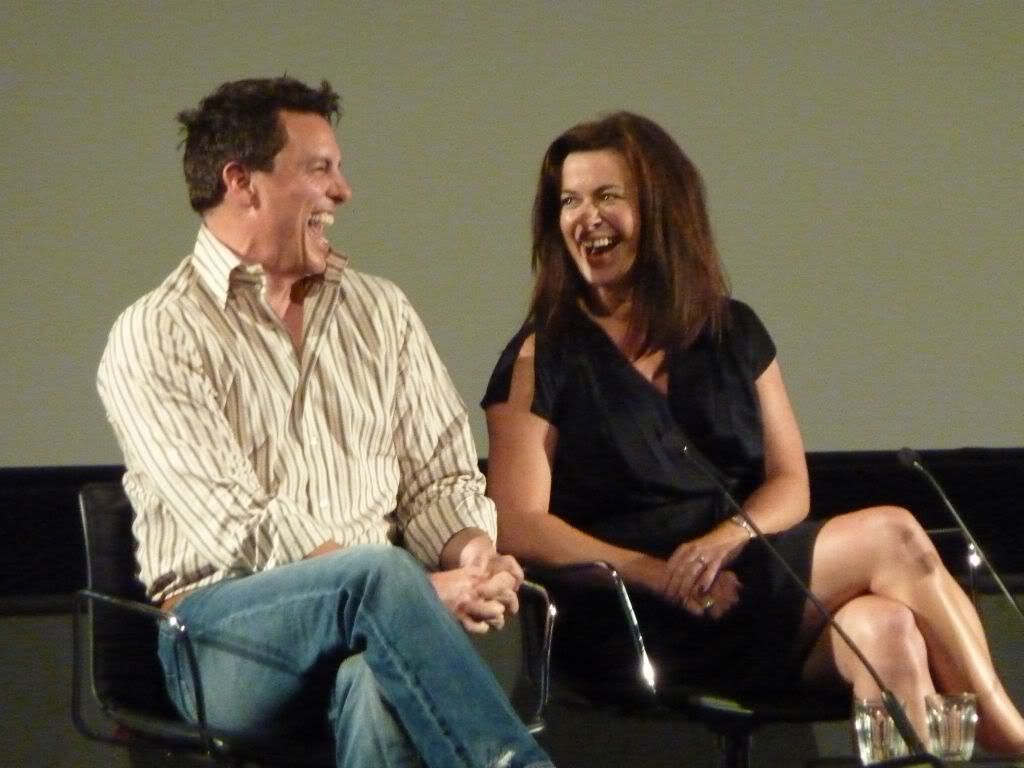
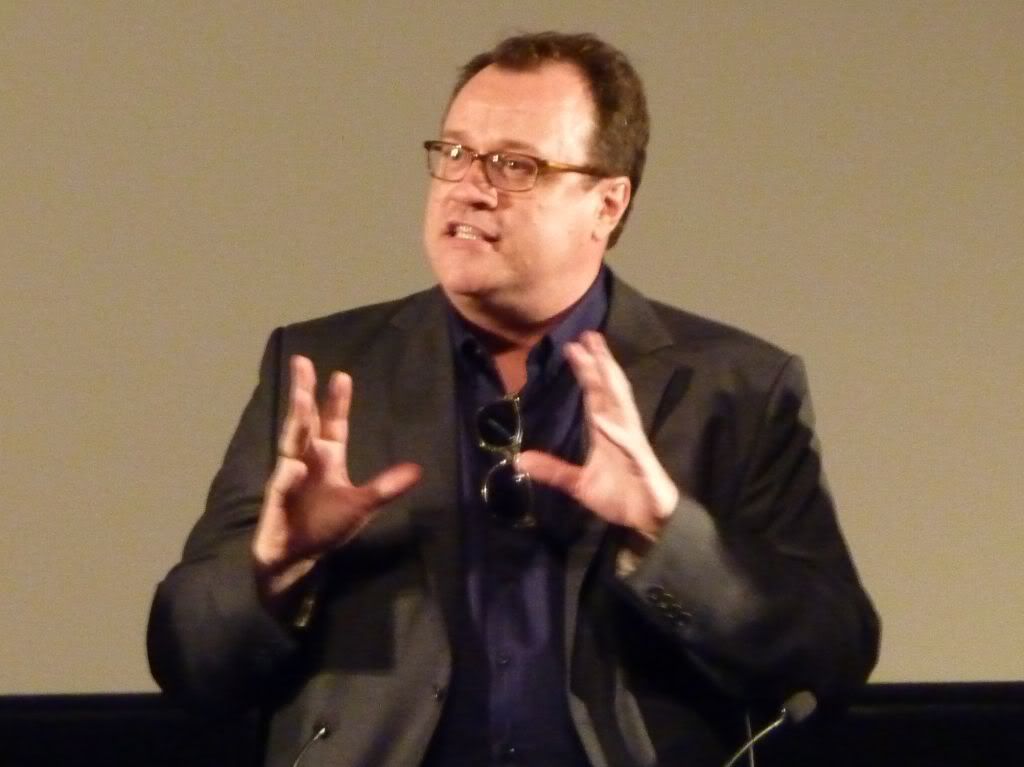
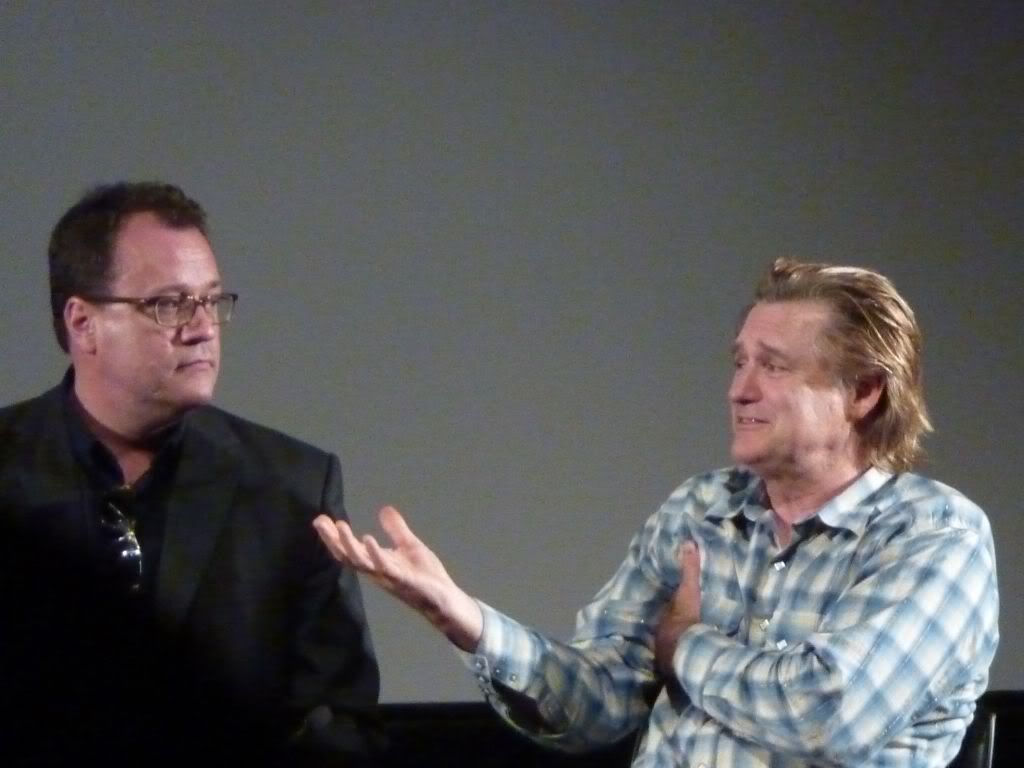
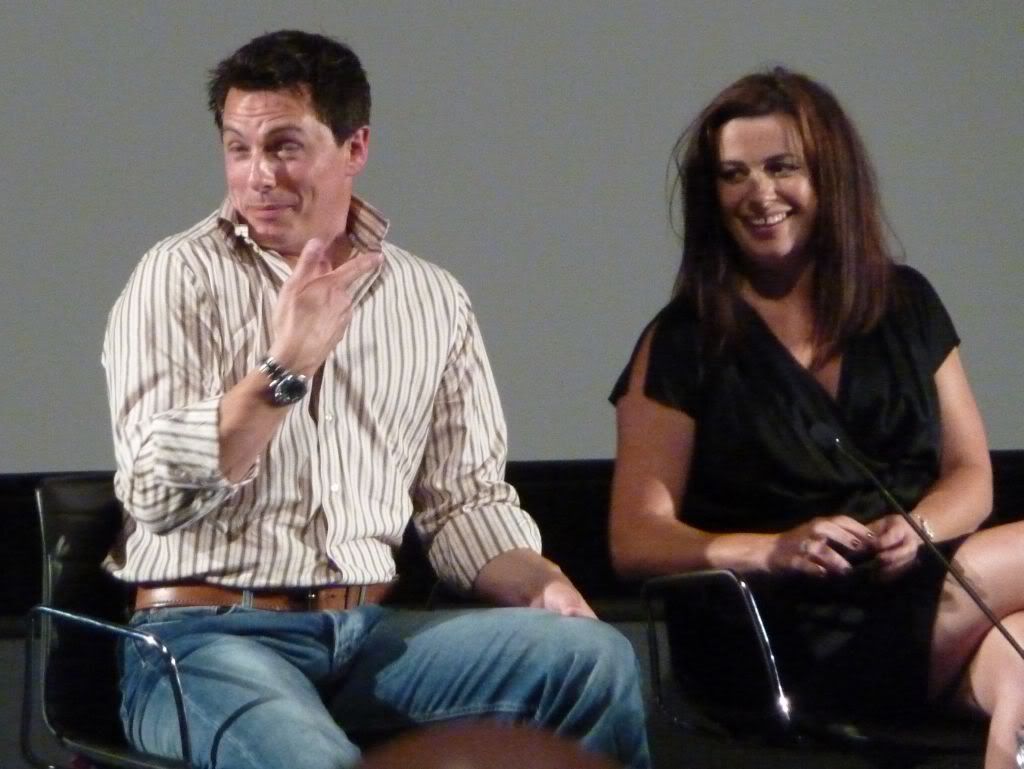
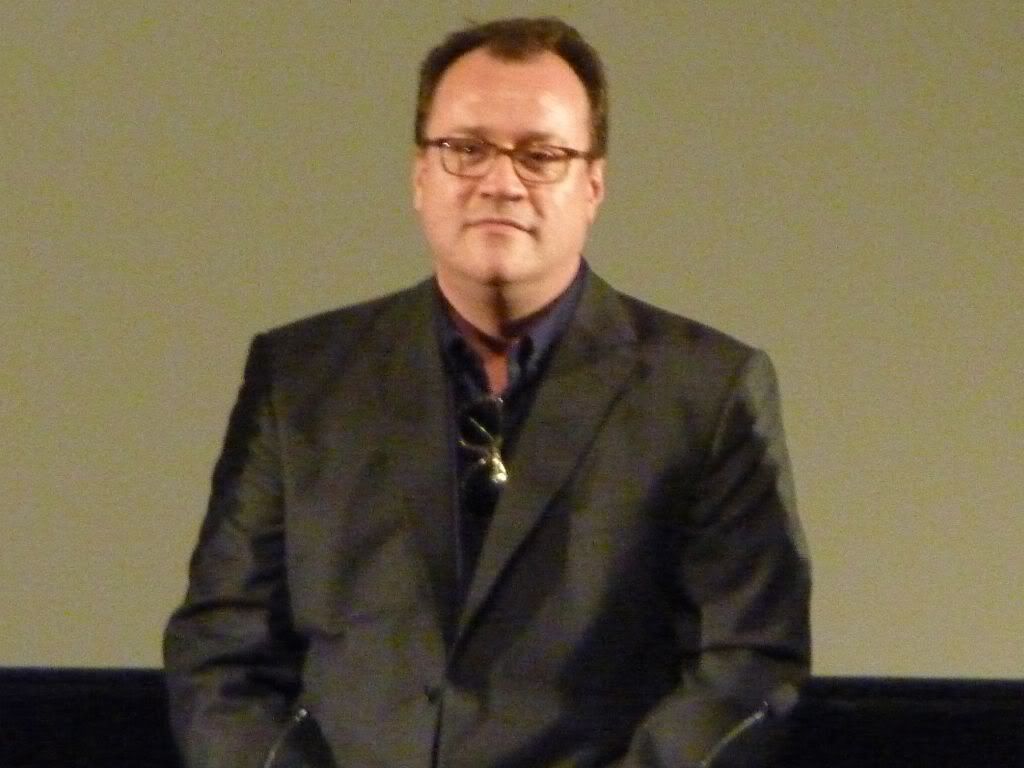
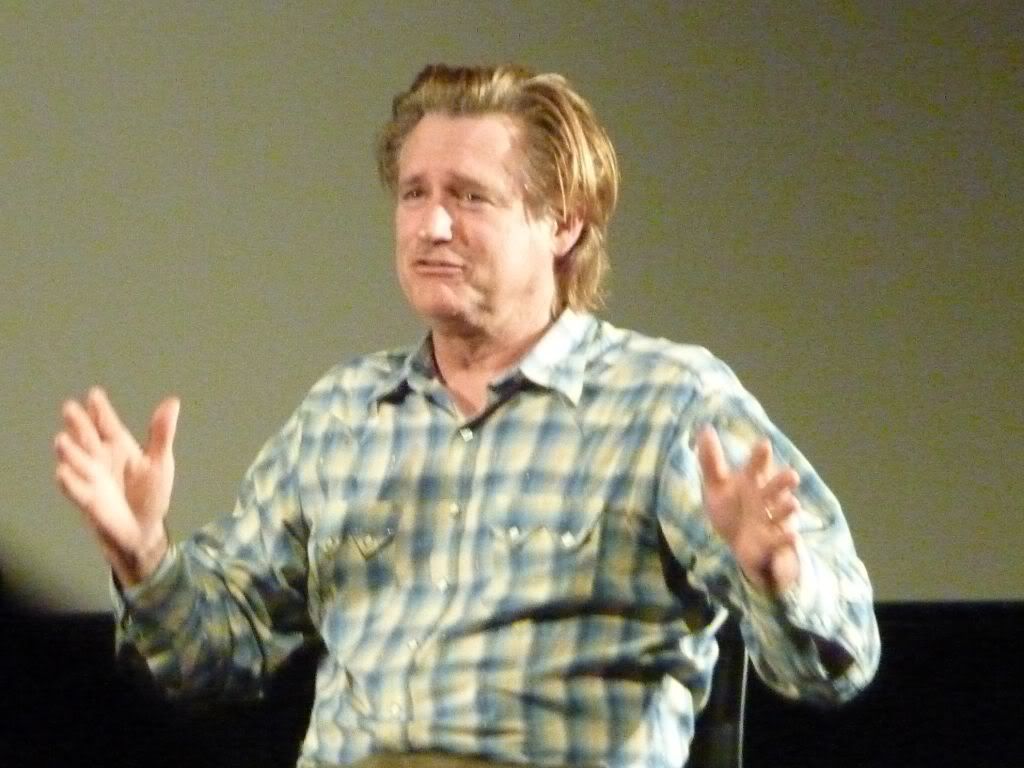
After the episode we were treated to a panel featuring John Barrowman, Eve Myles, Russell T Davies and Bill Pullman, who during the course of the session dipped into how they found filming the series in Los Angeles, how the series and characters have developed, and of course fun and laughter on set (what could you expect from John Barrowman?!!).

It was quite clear from the start that all of the actors found working together to be great fun, not to mention a little mutual admiration between those from the UK and those in the US. Being a self-confessed sci-fi "geek", JB gushed about his crush on BP from Spaceballs and had never expected to work with him at Warner Bros! He was also thrilled to have worked with the likes of Nana Visitor from Deep Space Nine, John De Lancie and Ernie Hudson. BP observed that with the distinguished Welsh cast he knew he was going to work with he was worried that what he termed a "Valley Girl" might be cast on the US-side, but in the end it was a sterling cast and crew all round.

Both JB and EM agreed that part of what they like about Torchwood is how the characters are grounded in reality - they have 'real' personalities, backgrounds and futures, and exhibit the human flaws and foibles. Part of Jack's makeup makes him very similar to Oswald Danes, in that both characters are known to have killed children (though of course in very different circumstances), with JB commenting that makes the two characters finally meeting poignant, both recognising something in the other.

Talking about the relationship between Jack and Gwen, RTD said that there was no romantic relationship between the two characters, and that their friendship comes from the deep respect, trust and affection they have for each other - Gwen has played a fundamental role in keeping Jack "human", and in turn he's been looking out for her family behind the scenes since Torchwood 'vanished'. Of course in reality the two are also firm pals, though John's reknowned capacity for practical jokes 'almost' fractured their friendship when he decided to play a prank of hiding in her shower and jumping out at her after a long early morning shoot, giving her one of the biggest frights of her life.

The cast enjoyed their time on the Warner Bros set in Los Angeles, with the "Hollywood lifestyle" fitting in rather well! With the studio lot so large, travelling about in golf buggies became the norm, though John got his own bicycle, complete with basket to carry his scripts in. Eve was very impressed in the sets they had, especially on how they had faithfully recreated the look of places like Gwen's parents' home (will we be able to spot the difference between the Welsh and Warner Bros versions?!!!).

Commenting on the potential "Americanisation" of the show in future (hopefully!) series, RTD was very frank in saying that should Starz want to continue and the BBC didn't want to co-produce then it could well become a wholly US-centric show; however, he felt that the show's Welsh roots were something that he'd really want to keep if he could. He also heaped praise upon his co-writer Jane Espenson, whose contributions helped bring Miracle Day together. BP revealed earlier in the discussion that upon receiving the scripts for his character it took him less than two days to accept the role based on the quality of writing and the storyline.

Responding to one audience question about the Doctor, RTD made it clear that he should never appear in Torchwood, as that would make children want to watch a show that clearly isn't aimed at them. Characters could move the other way of course, with Jack's origins being in the original show of course, and both Gwen and Ianto had appeared, too (when someone asked about Jack becoming the Face of Boe, RTD wryly pointed out that he wrote that!) JB wouldn't be drawn on whether Jack would be back in Doctor Who though ...

The atmosphere throughout the panel was very upbeat, with everyone on fine form and humourous banter bouncing between themselves. Examples included how RTD joked about BP actually accepting the role as he needed a new kitchen paid for, and EM explaining how JB doesn't like chickens and he responding with a comment about cockerels ...

Conclusion

All-in-all, it looks like the new series of Torchwood is going to be as dramatic as Children of Earth, though whether the plot can sustain itself over twice as many episodes as the former remains to be seen. At least Russell T Davies explained that the storyline is self-contained so we shouldn't end up with a load of potentially unanswered questions at the end of the series like some of the other recently cancelled shows coming out of the States ...

... except of course whether there'll be another series to follow!