Showing posts with label Events. Show all posts

Bookmark and Share Doctor Who World Tour Sydney Press Conference

Thursday, August 21, 2014 - Reviewed by Marcus

Reviewed by Tim Hunter
An email from BBC Worldwide inviting me to a screening of Deep Breath and press conference with Peter Capaldi and Jenna Coleman as part of the Australian leg of the Doctor Who World Tour is hard to refuse – even if it is in Sydney. I’m a Melbourne boy, about 900kms (and an hour and a half flight or 12-hour train trip away – further than the 240kms Cardiff is from London) south of Sydney, but how could I say no? So I booked a cheap flight to Sydney, arranged to stay with an old friend the night before, and I was set.

I’ve met, and done an interview in person with one other Doctor, Peter Davison, when he was here hosting the Doctor Who Symphonic Spectacular earlier this year, and I’ve done phone interviews with previous Doctors David Tennant and Matt Smith (as well as quite a few companion actors), but this was going to be the first time I would be in the same space as a current Doctor and companion. Capaldi and Coleman are the first 21st century TARDIS team to visit Australia, so of course, there was lots of excitement and anticipation.

I wasn’t the only one travelling to Sydney for this event; a fellow Melbourne journalist was also flying up, Doctor Who news contributor Adam Kirk was travelling across from Canberra, and on my flight was a couple, one dressed in an outfit resembling the Seventh Doctor’s TV Movie ensemble, and one wearing a Tom Baker scarf. Now that’s showing your true colours.

The press screening and Q&A were taking place at a cinema on Circular Quay, not far from the Sydney Opera House and across from the Harbour Bridge. Kick-off time was 9.15am, but I arrived early to catch up with Adam for a coffee and a chat. The café we chose had a great view of the Harbour, and as a result the price of the coffee was inflated, and the coffee not that great – very Parisian. But I’m a true Melbourne boy, and we take our coffee seriously.

Once coffee was done, we headed into the cinema foyer, and were greeted with the TARDIS – or at least a travelling TARDIS prop. After signing a confidentiality agreement (so no spoilers, I’m afraid Sweetie), we were given a press kit, complete with a press-out mini TARDIS to assemble at home, and then ushered into the cinema.

Local ABC Radio presenter Adam Spencer introduced the screening, and then it was time for a ‘Deep Breath’. It’s always fun watching a brand new episode with an audience; observing their reactions, laughing along with them, feeling the anticipation and sharing in the joy. And of course I won’t be giving anything away, but it does involve a dinosaur in Victorian London, the Paternoster Gang and a newspaper.

The episode was well received – of course, and as Adam returned to the stage and asked for comments from the crowd, it was like everyone was still processing it and not yet ready to articulate their thoughts. Then Peter and Jenna arrived, and soon they settled in for a chat with Adam. They covered a lot of ground, from casting to their first day filming together.

Q&A press conferences can be curious beasts. It’s kicking it off that’s always awkward and Adam did a good job launching straight into the questions, but when it was time for questions from the audience, everyone was a bit hesitant – no one likes to be the first, and there’s always the fear that you’ll ask a stupid question and make a dick of yourself. Once the audience got going though, there was a sudden flood of questions, mostly intelligent and thoughtful. There’s always one out of left field though, and someone asked Peter if he was going to follow in Christopher Eccleston’s steps and just do one season. Peter, Jenna and Adam looked a little taken aback, and you could feel the rest of the audience shift uncomfortably. Peter confirmed he was doing the Christmas Special, of course, and remained enigmatic beyond that, if a little mystified by the question himself.

Then it was time for Peter and Jenna to head out for the photo shoot. The TARDIS had been moved outside, and with the Harbour Bridge as a backdrop, Peter and Jenna posed for a tight and demanding group of photographers, a mix of professional paparazzi and amateur snappers. They were of course accommodating and graceful, responding to calls to turn this way or that, to go inside the TARDIS, outside the TARDIS, you get the idea. And of course, the commotion attracted a lot of passers-by and tourists all wondering what was going on. Some recognised Peter and the TARDIS; others had no idea. But the iPhones and cameras clicked away.

Adam and I managed to squeeze in for some good shots, but couldn’t get close enough to actually talk to Peter or Jenna. And then they were whisked away by a phalanx of publicists and minders, leaving the TARDIS available for a few selfies. We also managed to get interviewed ourselves about our thoughts on ‘Deep Breath’ and the Twelfth Doctor. And then the TARDIS disappeared and it was all over – as if if had never been there. But we will always remember that it was.

Bookmark and Share Once, A New Musical with Arthur Darvill

Tuesday, April 08, 2014 - Reviewed by Marcus


Playright: Enda Walsh
Music and Lyrics: Glen Hansard, Markéta Irglová
Director: John Tiffany
Opened New York: 6 December 2011
Opened London: 9 April 2013
Current London Cast: Arthur Darvill, Zrinka CviteÅ¡ić, Fiona Bruce, Mark Carlisle, Jamie Cameron, Matthew Ganley, Mathew Hamper, Allison Harding, Daniel Healy, David Hunter, Loren O’Dair, Tim Parker, Miria Parvin, Tim Prottey-Jones, Sophie Reid, Christina Tedders, Alex Turney, Jez Unwin, Ruth Westley, Robbie White
Phoenix Theatre, Charing Cross Road, London
Once, A New Musical has been running in London's West End for over a year now, but its latest star has drawn a new crowd of Doctor Who fans, as Arthur Darvill takes over the role of Guy for the next month.

The role is a very different one for Darvill, far from the reluctant hero Rory dominated by his assertive wife, and patrons expecting to see a musical version of Rory will be disappointed. But in the role of Guy, Darvill is outstanding. It is a role he has played on Broadway and one in which he excels, bringing a reality and grit to what could be an over-sentimental piece.

The musical takes place at the Phoenix Theatre in London, but on entering the auditorium you find yourself in a Dublin bar. Indeed, a real bar with real drinks being served stands at the back of the stage, with members of the audience being encouraged up to spend some money and listen to some good Irish music. It's a very clever device which puts the audience in the centre of the action from the very start, literally mingling with the show's cast, and you hardly notice when the stage managers gently move the audience members into the stalls and the action begins.

In the show Darvill plays a Dublin busker and vacuum cleaner repair man, pining for a lost love. It's a role he seizes with relish and it gives him a chance to return to his musical roots. He belts out his numbers with a passion and energy that lifts the whole show. He has a fine strong voice and as he pours his heart into the songs you really feel his pain, passion and frustration.

In the story he meets a young Czech woman in the bar who is moved by his music and they start to fall in love. The girl is played by Zrinka Cvitešić who has been with the production since its London premiere and who is delightful in the role, bringing a playfulness and vitality and a zest for life to the role, which sees her tease and cajole Guy into performing his music and bringing him out of the depression he was mired in.

The whole cast perform their own music, and as the musical proceeds bring a whole raft of characters to life, from the girl's eccentric flatmates to the Irish bank manager with a hidden secret. The fact that there is no orchestra churning out a backing track, with all the music coming from the players on stage, again feeds into the reality of the show and draws the audience into the action.

All in all, it is a very entertaining evening. Darvill is with the London cast until 10th May, with the production booking into next year.


For more information on the production visit the official website or the Once, The Musical Facebook page.
Thanks to Dewynters

Bookmark and Share Doctor Who Symphonic Spectacular - Melbourne

Sunday, February 02, 2014 - Reviewed by Marcus


Doctor Who Symphonic Spectacular
Music from the BBC Television Series
BBC Worldwide
Plenary Hall, Melbourne Convention and Exhibition Centre
1st February 2014, 7.30pm
Reviewed by Tim Hunter
Back in 2012, the Doctor Who Symphonic Spectacular proved immensely popular and successful at its first international outing with the Melbourne Symphony Orchestra. So popular that the following year it went to Sydney, and this year, it has returned to Melbourne, and will travel to Brisbane in Queensland and then across the ditch to Wellington in New Zealand. In each city, it will be collaborating with their respective symphony orchestras. In front of an enthusiastic crowd of 5,000 people – ranging in age from eight to 80, if not even younger – at the Plenary Hall in the Melbourne Convention and Exhibition Centre, the concert was nothing short of spectacular. Not only was it a wonderful celebration of Murray Gold’s original music for Doctor Who, it was also a fitting tribute to the TV show that turned 50 last year.

This year’s concert was largely based on the 50th anniversary Doctor Who at the Proms. The majority of the music came from the last four years of the show, covering Matt Smith’s time as the Doctor. Conductor Ben Foster, with the Melbourne Symphony Orchestra and Chorus, kicked things off with the blood-racing theme for the Eleventh Doctor, ‘The Madman With a Box’, with vocals supplied by soprano Antoinette Halloran, and other recent themes soon followed, including a medley of the companions’ themes for Rose, Martha, Donna and Amy, ‘Abigail’s Song’ from the 2010 Christmas Special, A Christmas Carol, the song from The Rings of Akhaten, Clara’s theme, ‘The Impossible Girl’, and music from The Name of the Doctor and The Time of the Doctor.

It wasn’t all about Matt Smith though. The Classic series was well represented too. Of course, hosting the concert was Peter Davison, the Fifth Doctor, or Doctor 005 as he called himself. He was immediately charming, relaxed, funny and clearly enjoying himself. Throughout the evening, he slipped in witty asides about his time as the Doctor, and engaged in some cheeky repartee with Foster that at one stage involved a cricket bat, a bunch of celery, and a score for Earthshock – The Opera. Davison wasn’t the only Classic Doctor to have a presence. Via the marvels of pre-recorded video, the wonderfully barmy Tom Baker featured in two segments speaking directly to the audience, and there was also the nostalgic ‘Classic Doctor Who Medley’, with music from all seven Classic Doctors. Most memorable though were the groovy 60’s sounds of The Tomb of the Cybermen and the evocative score for City of Death.

Apart from the thrills and emotions of the live music, the other exciting element was – naturally – the presence of aliens and monsters roaming the auditorium and the stage. Like last time, this included Silurians, Cybermen, the Silence, the Ood, Vampire Girls, Judoon and of course the Daleks, playing it up with Foster as they took over the hall. But new and welcome additions included the new Cybermen from Nightmare in Silver, ther impressive presence of Ice Warrior Skaldak from Cold War, and the Whisper Men from The Name of the Doctor.

If there was one thing that didn’t quite live up to expectations, it was Gold’s new song, ‘Fifty’, a tribute to the 50th anniversary. While it’s a beautiful song, sung wonderfully by Halloran and tenor Paul McMahon, the lyrics weren’t particularly easy to make out. Just as well they’re printed in the glossy programmes! Overall though, it was a visual and aural triumph, a perfect tribute to Doctor Who and Gold’s music and received rapturously by the audience of fans and their families, many of whom came dressed for the occasion, despite the heat, with plenty of bow ties, fezes and a whole lot of Doctor Who t-shirts. The Doctor Who Symphonic Spectacular was an event that won’t be forgotten quickly.

Bookmark and Share Doctor Who Official 50th Celebration (ExCeL London, 22-24 November)

Monday, November 25, 2013 - Reviewed by Matt Hills

The lead-up to this event wasn’t always the smoothest experience for many people, particularly when an incorrect pre-sale code went out to fans intent on booking TARDIS tickets and Matt Smith photos. But all that is in the past; how did these three days measure up to fan expectations? And what of fears that the Celebration would be overly corporate, lacking in the intimate, sociable atmosphere of smaller fan-run events?

Doctor Who Celebration: Guinness World Record announced (Credit: Matt Hills)For something originally billed as three iterations of essentially the same thing, it wasn’t only the line-up of guest talks, screening commentaries and features that shifted every day. Each day also had a distinct feel to it: different moments, same venue. Day 1 was largely about organisers finding their feet, and realizing what didn’t work and what needed tweaking, leaving guests almost treated as guinea pigs ahead of the actual anniversary date. Saturday hosted the Graham Norton Show, and had fans commemorating the anniversary instant at 5:16pm. By this time things were running more smoothly. However, on Sunday there was a sense of some merchandise stock running out and last-minute scheduling taking hold (“check at the Event Information/Meeting Point”), but most people were in a post-Special haze and were ecstatic to be there for the Guinness world record announcement at the end of the Eleventh Hour panel.

Friday was, in my opinion, fairly chaotic on an organizational front. Far from being slick, polished and corporate, it was sometimes eccentric and amateurish. Visitors wanting to pick up their pre-booked T-shirts were herded into a long queue whilst other merchandise tills were staffed by blue-shirted Crew left twiddling their thumbs. Only after this arrangement became manifestly ludicrous did somebody think to open up T-shirt collection at multiple till points. Similarly peculiar was the first Friday autograph session I attended. Guests had no photos available to sign (unlike most commercial events I’ve attended over the past few years, which almost always give this option), and those autographing had only black pens with which to sign. Utterly useless on the rather nice Show Planner – printed on black – if this was all you had, and not a great deal of use on the Radio Times anniversary cover I’d brought for Kate O’Mara to sign. Again, there was some rethinking later in the event: still no glossy prints for guests to sign, but some metallic Sharpies were acquired. From the approach on Day 1, though, you’d think that the folk running this had never arranged a signing before.

Queuing was a constant problem for certain things. In a self-defeating and strangely anti-commercial move, organisers somehow managed to contrive a situation whereby the official BBC Shop had continually lengthy queues, lacking the necessary floor space and needing to control crowd numbers. This particular shopping destination should have been much bigger on the inside, and I continually overheard complaints from fans trying to get in. Picking up an Enemy of the World DVD became something of a trial, and I’ve no doubt that much time was lost by the poor people queuing to look at show offers and exclusives (there were lots of 5-inch ‘holographic tenth Doctor’ figures left on the shelves at the end of the last day). By contrast, a rather fine 50th anniversary tote bag over at the Plastichead stand sold out by the end of Day 2, leaving Sunday attendees without any chance of picking one up (stupidly I hadn’t bought one earlier).

Official event merchandise offered a range of things: standard gubbins like a keyring (a smart metallic effort), postcard, bookmark, poster, brochure (thankfully it had a pale cover, so this was very useful to collect guest autographs) and a gorgeous anniversary enamel pin set which staff told me was exclusive to the event and limited to 500 sets. Despite this probably being the best of the bunch, it was a little over-priced at £65, and was discounted to £40 towards the end of the final day in an evident effort to boost sales. Such a nakedly commercial move – like a market trader looking to unload his wares – struck me as a curious one, and all the more so since I’d paid full price on Friday (stupidly, I had bought one earlier).

There were some other brilliant show exclusives (or premieres) on the merchandise front: along with the Plastichead tote, Big Chief Studios were offering 25-a-day of their ‘Day of the Doctor’ Tennant exclusive: I arrived first thing on Friday only to find 001 of 100 had just been paid for, and that there were several other dedicated collectors ahead of me in the queue. Sunday also boasted a few ‘Day of the Doctor’ items that could only go on sale after the anniversary special had screened: Underground Toys were selling ‘The Other Doctor’s Sonic Screwdriver’, and Dark Bunny Tees – responsible for a great range of T-shirts across this year – unveiled two new designs on the Sunday, including a particularly impressive ‘Space-Time Telegraph’ one.

Doctor Who Celebration: Cold War model on displayBut what of things beyond the collector’s view? Well, there was enough to keep 13 incarnations busy, so you had to plot a time-space path through all the offerings and stick to your preferences. Even spending three days there, you couldn’t exhaust all possible options. As well as Classic Lounge talks and Screening Room live commentaries that could be pre-booked, there were also Stage 1 and 2 features, and these included talks by Phil Collinson, Bernard Cribbins and John Leeson as well as a fantastic Big Finish performance involving members of the audience and a magical demo from special sound maestro Dick Mills. Millennium FX also hosted some highly entertaining demos, whilst the Real SFX stand and a fabulous range of costumes also gave visitors a chance to chat with people who’ve worked on the show. Another personal highlight for me was the section manned by Mat Irvine and Mike Tucker: this featured Mike’s model submarine work from Cold War and an utterly superb set-up of the gateway, Privateer and model TARDIS from one of my all-time favourites, Warriors’ Gate, which I couldn’t recall seeing in this arrangement at an event before, and which Mat said they’d set up as something new for the Celebration. Wonderful, wonderful stuff.

With so much happening in this one hall, it was perhaps unsurprising that people didn’t always think to head upstairs to the Screening Room or the Classic Lounge talks. These were often sparsely attended, but I was privileged enough to witness Philip Hinchcliffe and David Collings chatting over episode one of Robots of Death, the energetic Graeme Harper discussing part one of Caves of Androzani, and Andrews Cartmel and Morgan talking over episode three of Remembrance of the Daleks. The legend that is Terrance Dicks also held an audience spellbound whilst discussing The Three Doctors (and I was especially pleased to see the anniversary special acknowledging his input: Terrance talked about his “wheezing, groaning” description of the TARDIS). And Anthony Read’s forthright analysis of The Invasion of Time marked a fascinating end to Sunday’s proceedings, though I suspect many people were already heading home by that point.

The Classic Lounge also delivered some great chats. I only made it to a few of these. Lalla Ward, Bonnie Langford and Mark Strickson were all great: and Lalla, in particular, adopted an idiosyncratic approach to answering questions: she was the only guest I heard across the event informing a fan that their question was unanswerable and so she simply couldn’t respond to it. She also drew gasps from the crowd (and this was a well-attended session) by admitting that she hadn’t seen The Day of the Doctor, and probably never would. Another session with Deborah Watling and Frazer Hines was also hugely entertaining, with Frazer's impersonation of Patrick Troughton earning an impromptu round of applause.

By the last day, the Screening Room and Classic Lounge were being promoted in the main stage Regenerations event, and there seemed to be more signage pointing out their existence. But I was moved to ponder why they had been so poorly attended in many cases. The pre-booking system implied that events were full (or nearly full, with only a few tickets left on the day), but since this was pretty much never true, what went awry between online booking and the event itself? Perhaps people were stuck in queues and couldn’t get to sessions; perhaps some had double-booked and then chosen what to go to (since the online system allowed this); perhaps many visitors with children decided to pursue more kid-friendly events. Whatever the explanation, I was left with the odd sensation that I was in a tiny minority in terms of being interested in Harper, Hinchcliffe and Dicks’ live commentaries: an unexpected outcome for a 50th Celebration. These events also circumvented the commercialization of photos and autographs happening elsewhere, with a good selection of guests being more than happy to pose for pictures and sign autograph books, brochures or Day Planners. Terrance Dicks, Graeme Harper and Andrew Cartmel were all absolute stars, while Fiona Cumming was also lovely after her Castrovalva episode 4 screening, and very happy to chat to fans.

Doctor Who Celebration: Matt Smith, Jenna Coleman and Steven Moffat on stage (Credit: Matt Hills)Time to focus on the main events. These also varied from day to day, despite occasional repetitions (which actors largely kept fresh-sounding) and a sense that Crew were picking children with very similar questions. Sunday was the real revelation, as this Eleventh Hour panel featured Nick Hurran – director of The Day of the Doctor – and was finally free to discuss the Special, along with showing a number of clips and repeatedly projecting that shot of Capaldi’s eyes onto the big screen. (Is there a fanzine or a blog called Capaldi’s Eyebrows yet? There ought to be: they had become a meme by Sunday). This session also became unexpectedly melancholic, as Steven Moffat revealed this would quite likely be his final panel with Matt, and Matt asked the crowd to “keep the fezzes going after I’m gone”. The Curator’s appearance was also discussed, though part of me wished that Tom Baker and Steven Moffat had been on the same panel on November 23rd, so that fans could ask about the fact that this legendary star had gone up against showrunner control by issuing spoilers about his own involvement. But a question as off-message as this would never have been selected; instead we were mostly treated to stock inquiries (favourite monster/episode).

Doctor Who Celebration: Tom Baker on stage (Credit: Matt Hills)Another variation was the involvement of Tom Baker in Saturday’s Regenerations panel, where he tended to dominate. Peter Davison, sat next to Tom, wore a studiously amused and indulgent expression throughout, with the very slight implication of ‘I knew this would happen’. Perhaps Tom should have been given his own session, but it was truly magical to see him on stage celebrating his time as the Doctor: for those of my generation (I was ten in 1981), this proved to be the day of Tom Baker.

Amongst the cornucopia of Who things, there were also photo opportunities. I was lucky enough to have photos taken with Matt Smith and Jenna Coleman, and these were quickfire but good-natured events. I found both lead actors to be warm and personable, despite the “move along now” setting. Collecting photos on Day 1 involved more standing in a queue, but this had been revised twenty-four hours later, and it was then quick and easy to pop back and get one's picture.

I’d imagine that there are many lessons to be learnt from this event. One of my favourite admissions of organizational error was the fact that by Day 2 a Box Office sign had gone up informing visitors that – contradicting every ticketing email and print-out sent to every attendee as far as I know – "Collection of autographs is not at this desk... Collection of TARDIS photographs is not at this desk... Collection of cast photographs is not at this desk”. Staff admitted that email instructions had caused them many headaches. So, did Crowdsurge modify their processes halfway through planning? Did they even know how the ExCeL would operate? Crowdsurge did, on the other hand, have a habit of sending out emails and new confirmations correcting their multiple errors about event times. Rather like the oddly planned autograph sessions involving one colour of pen (on the Henry Ford principle), you’d almost imagine that the folks organizing this had simply never done it before. Fandom probably cherishes one thing perhaps above all else: attention to detail. And on this basis, organisers sometimes resembled anti-fans, for whom attention to detail was remarkably low on the apparent list of priorities.

And yet, and yet... this all came together as an event from which I’ll cherish many wonderful memories. The entrance to the hall was beautifully done – utilizing I.M Foreman gates, and a replica of the original TARDIS in its junkyard setting, as well as emulating aspects of Lime Grove studios. You really felt like you were emotionally time-travelling as you stepped through the gates, and an expanse of Doctor Who areas and arenas beckoned.

Was it an excessively corporate event? In some ways, perhaps: closing merch discounts certainly struck an off note, and TARDIS VIP tickets promised “exclusive” items in a goodie bag which turned out to contain the exact same Celebration merchandise available to everyone else present. Arguably, TARDIS tickets were really only worth the extra money in order to sit in the first few rows of the auditorium, though the TARDIS lounge did offer a break from all the standing, plus as much tea or coffee as could be humanly imbibed. Meanwhile, standard tickets tended to mean that unless you were very lucky you could only see the guests on-stage on the big screen – inevitable given the size of the audience. But in other ways this was far from corporate: the accessibility of guests outside the contractual circle of current stars was lovely, and attendees were also wonderful: fans happily snapped pictures for their fellow devotees, and I saw almost continual acts of small kindness, as well as those in costume being appreciated by others (there was a magnificent tin-foil Cyberman ahead of me in Friday’s entry queue). The atmosphere was generally supportive, communal and joyous, other than slight bits of queuing grumpiness erupting round the BBC Shop (a sensible response to circumstances, truth be told). Some stars were happy to pose for photos – Bernard Cribbins was a true superstar in this respect – and to sign things that you weren’t immediately buying, e.g. David Warner’s attendance at the Big Finish stand was another great bonus.

In the end, this more than lived up to its title. But Day 1 simply should have been run better – it seems unforgivable to be working out reasonable processes as you go along, whilst also (as I understand it) largely relying on unpaid voluntary Crew labour. And the Celebration should never have been billed as three ‘repeats’ of the same content, as the substance of each day was more than sufficiently varied to merit three days of celebrating, pre and post the 50th. “Three of them!”…but this wasn’t a nightmare, more a dream come true, albeit with occasional darker moments. Happy birthday, Doctor: you did it in style, and those who’ve carried the flame across the past fifty years – and so were perhaps less bound by current brand management – made it especially worthwhile for me, whether that meant chatting to Mat Irvine or getting a photo with Terrance Dicks. Lanyards proclaimed “I was there”, and in years to come this will probably take on the mythic status that Longleat 1983 has already attained for generations of fans.

Bookmark and Share An Adventure in Space and Time at the BFI

Wednesday, November 13, 2013 - Reviewed by Anthony Weight

There are many things in life, in art and in drama that can provoke emotion. It’s probably safe to say that a car’s tax disc is not usually one of them.

However, I feel almost certain that I can guarantee no Doctor Who fan of long-standing will be able to avoid at least a little twitch, a certain emotional pang in the opening moments of An Adventure in Space and Time at the date on a disc which comes into shot, and what it signifies. It’s a brief moment, one among many that will mean nothing to the general audience, but adds an extra layer for anybody who has a familiarity with the show we all hold so dear.

I am a grown man, not often given to tears, but I must confess that sitting in the back row at the BFI yesterday evening, just that brief shot made me well up a little. It’s probably no surprise, therefore – as pathetic as it sounds, and I do realise how odd it must seem to some – that I found myself crying real tears come the end. I was taken aback myself. I’d been looking forward to this drama a great deal, and for a long time. But perhaps foolishly, I hadn’t expected to find it as affecting as I did.

I have been utterly fascinated by the creation of Doctor Who, and the many and varied interlinked stories behind it, almost ever since I can remember. Part of the appeal of the fiction of the series when I was a very small child was always how much of a mystery it was, how there was so much mythology and so much backstory that I could only ever seem to have tantalising little glimpses of from BBC repeats or the occasional video borrowed or purchased.

But gradually, the real-life history began to interest me too. I can’t pinpoint exactly when it was – perhaps when I was seven years old and BBC Two showed an edit of the pilot recording as part of The Lime Grove Story. Perhaps when my parents bought me Doctor Who – The Sixties for Christmas at the age of nine, the year of the programme’s thirtieth anniversary – a frightening 20 years ago now!

I read that book again and again, despite having at the time seen hardly any of the episodes the making of which it chronicled. But I think the book that really made me realise what a great narrative there is to the creation of Doctor Who back in 1963 was The Handbook: The First Doctor by David J Howe, Mark Stammers and Stephen James Walker. I bought a copy in 1997, and was riveted by the “Production Diary” section, which tells the story of how Doctor Who came to be created using the memos, letters, format documents and various other pieces of paper preserved in the BBC Written Archives Centre at Caversham.

There’s something captivating about the story for so many reasons. A big part of it is because we now know what the legend was that they were about to launch. Partly also it’s because of the huge challenges the first production team faced, and how so many times it seemed as if the series wouldn’t even make it to the screen, or past its first few episodes. It’s also to do with the varied personalities involved, changing times at the BBC as it moved into the sixties and the drama department changed and evolved… And also, no doubt, a nostalgic interest in the way television was made long ago, if you can be nostalgic for a time long before you were even born!

I knew that it was a great story, and one you could tell as a drama, and of course I was very far from being the first to have that idea. Back in the thirtieth anniversary year, 1993, Kevin Davies (who was in the audience for this screening) had come up with a notion called The Legend Begins, which would have mixed interviews with those responsible for Doctor Who’s creation with a dramatised strand, showing how it all happened with actors in the roles of those well-known names.

This project never came to pass, and Davies eventually made Thirty Years in the TARDIS for BBC One instead, as a (relatively!) straightforward documentary. But with the fortieth anniversary coming up in 2003, Mark Gatiss had a similar idea – to tell the story of the beginnings of Doctor Who as a drama. It never got anywhere, and I remember reading Gatiss’s Doctor Who Magazine feature interview that year, where he spoke about the idea, and I felt sad that it hadn’t come to pass.

Possibly inspired by reading that, I even had a go at writing the story myself, as a novel called 1963. It was rejected by various agents and publishers (probably for the best!), but I was thrilled in 2012 when it was announced that the story was at last to be told in fictionalised form. The BBC had commissioned Gatiss to dust off his old idea for the fiftieth anniversary, and An Adventure in Space and Time was born.

I eagerly, perhaps even obsessively, hoovered up every detail of the production as and when they became available, pored over every on-set photo and read and re-read every interview. It’s long been one the highlights of the anniversary season that I have been looking forward to the most, so I was deliriously happy when I got the chance to attend the premiere screening at the British Film Institute in London, as a reviewer for this website.

After all that waiting, all of that build-up, and having a reasonably good grounding in the real history behind it all… how does An Adventure measure up?

It’s a hop-skip-and-jump through the early history of Doctor Who, but of course it had to be, and I went in knowing that full-well. Those endless reams of documentation and memos of which I spoke are endlessly fascinating to people like me, and perhaps you, and I’m sure to Gatiss as well, but would make for pretty interminable viewing for the average viewer to which BBC Two really have to be reaching out.

Nobody wants to see 90 minutes of people reading detailed BBC documentation to one another. Nonetheless, I was pleased to see that we do get flashes of dialogue between characters that some will recognise from some of those memos that were flying about during the creation of the show – I was particularly pleased that Donald Wilson’s (sadly absent here as a character) note to the editor of the Radio Times about the show being a “knock-out” survives in a line given to Verity Lambert, for example.

Wilson is not the only character to be absent, and like fans perhaps mourning the absence of classic series Doctors from the forthcoming Day of the Doctor, many of us will have favourites who we feel were perhaps worthy of greater recognition, or who have been overlooked. Gatiss himself, in the panel session which followed the screening, mourned the absence of David Whitaker, as he had also done in other interviews prior to the screening.

But part of the problem of the story of the birth of Doctor Who is that it involves so many people, and has so many great stories and sub-plots within it. You could have a whole drama about the work of the Radiophonic Workshop, or about the roles of Raymond Cusick and Terry Nation in creating the Daleks.

What we have here is a condensed, simplified version of Doctor Who’s beginnings painted in broad strokes, with the order of events streamlined and in some cases moved around a little. In fact, there’s even an argument for saying that this isn’t about the creation of Doctor Who at all – it already exists within the first few minutes of the drama, and most of what follows is about the process of actually getting the idea made.

In a lot of the promotion and build-up to An Adventure in Space and Time, it has been promoted as the story of four extraordinary people and how they combined to create a television legend – Sydney Newman, Lambert, Waris Hussein and William Hartnell. I would suggest that this is not quite the case. Newman’s role is really a supporting one, and while there is some focus early in the piece on the relationship between Lambert and Hussein, really it’s Hartnell’s piece, and David Bradley delivers a suitably towering performance in the part. All of the cast are good, but he is especially so, utterly convincing both as the Doctor and, as we now have a little more insight into from the Points West interview, as Hartnell outside of the role. Indeed, a line from that interview even makes it into his dialogue early on, which I thought was a nice touch.

But it’s a piece full of nice touches, none more so than at the end. Before the screening started, we were kindly and rightly asked by the BFI’s Television Programmer Marcus Prince not to share any spoiler details of the drama, and I do not intend to do so here. Indeed, I really, truly hope you don’t see any details about the ending before you see the programme, and are able to come to it fresh – you’ll find it so much more rewarding if you do. I shall simply say that it did not end in the way I had expected, and the way in which it did finish hit me so hard that the tears did indeed begin to flow.

It’s ridiculous. Ludicrous. It’s just a children’s programme that we all enjoy watching. But it was a perfect moment, one that thoroughly deserves to go unspoiled.

I suspect many of the rest of the audience shared my appreciation for it, given the reaction as the end credits rolled. This is the fourth of these 50th anniversary screenings at the BFI which I have attended, but it was the first at which there was a standing ovation as the programme finished.

During the panel, both Bradley and director Terry McDonough said how flattered and moved they had been by the reaction, and McDonough told the audience he’d never been at a screening before where he felt those watching were so engaged with what they were viewing. McDonough deserves praise for his work here, in return – there is a particularly impressive sequence set on the 22nd of November, where what you think you’re watching turns out to be something quite different. You get the feeling from one or two comments that were made during the discussion following the screening that they would have liked to have had a bigger budget, but no lack of effort was visible on screen. Gatiss described one moment he would have liked to have included, during which he mentioned that the final episode of The Daleks’ Master Plan was missing “at the moment,” which prompted laughter from an audience clearly well-versed in the constant merry-go-round of missing episode speculation and rumour!

The panel itself was also a joy, conducted by journalist, broadcaster and well-known Doctor Who fan Matthew Sweet. Joining Bradley and McDonough were Gatiss himself, Sacha Dhawan (who played Waris Hussein) and William Hartnell’s granddaughter, Jessica Carney. Carney had needed to leave the auditorium for a short while after the drama had finished in order to compose herself, which isn’t surprising. If it made some of us feel emotional, how must it feel for her, who had such a close and personal connection to what we being shown? She even appears in the drama as a character herself, which must have been a slightly bizarre experience.

It’s clear that Gatiss wanted this to be a love letter to Doctor Who and a tribute to all of those who were involved in its creation, whether they made it onto the screen or not. It’s not a documentary representation of what happened in 1963, it was clearly never meant to be. It’s a celebration, and in that respect it hits and mark spot-on. And if it inspires a new generation to become fascinated by the history of the show, to learn to explore the real story of what happened, then so much the better.
Compiled by:
Paul Hayes

Bookmark and Share The TV Movie at the BFI

Sunday, October 06, 2013 - Reviewed by Anthony Weight

For the previous screenings in the British Film Institute’s monthly Doctor Who 50th anniversary events, there has been some degree of choice for the organisation in which story it selects to celebrate the era of each particular Doctor. While it’s true that every era of the show has a small gaggle of stories held up as classics by a large portion of fandom, there have still always been options. Not so, however, for Paul McGann as the Eighth Doctor. The man who once described himself as “the George Lazenby of the Time Lords” is represented by only a single entry in the televised history of Doctor Who – the 1996 TV Movie, which brought the programme back from the dead after seven years, but failed to lead to the new US network series that the team behind it had been hoping for.

That said, McGann’s sole outing on-screen wasn’t the initial focus of this event, which – unlike the others in the series that I have attended – began with a discussion panel before the showing, which kicked off at 10am, with much apology from host Justin Johnson that we’d all had to get up to early on a Saturday to be there! The first panel was a discussion and celebration of something the sheer level of which may be unique to Doctor Who – the plethora of fan-originated professional spin-off media that carried the flame of the series during the long years the TV show was off-air, both before and after McGann’s sole outing.

Dick Fiddy, Johnson’s co-host at all of these BFI events, expertly and deftly guided a panel consisting of Seventh Doctor script editor Andrew Cartmel, Big Finish’s Nick Briggs, Jason Haigh-Ellery and Gary Russell, BBC Books novel editor Justin Richards and non-fiction author and former Doctor Who Magazine co-editor Marcus Hearn. Cartmel more seemed to be there because he wasn’t able to attend the Seventh Doctor event back in August, and unlike the others on the panel didn’t come up through fandom and the fanzine world, but he did write for both the novel ranges of the 1990s and for Big Finish, and had interesting things to say about what were being somewhat jokingly referred to as “the wilderness years.”

While you might perhaps think that such a panel could be a little dry, the conversation was free-flowing and, for me, fascinating, and it was interesting to hear the opinions on display about the years when Doctor Who was very much a non-mainstream, cult property, being made by fans, for fans in terms of books and audio dramas. Some of the panel even admitted that they never really thought Doctor Who would ever return to television, although of course all were delighted when it did.

The panel was enjoyable and informative, perhaps the most so among all those I’ve seen at the BFI, and I was surprised to find it had gone on for as long as 45 minutes. If anything was missing it was perhaps any real discussion of Virgin Books’ output during the 1990s, although Russell did acknowledge what an important contribution they had made in originating the careers of writers who went on through BBC Books, Big Finish and in some cases onto the TV series itself. But it was an organic discussion, you can’t plan to include each and every thing, and there was only so much time available.

It was a small surprise that the TV Movie wasn’t then formally introduced – after the panel had finished and the chairs were removed from the stage, the lights went down… Then briefly up again, then down again, then the movie started – hopefully not catching anybody out who’d taken the opportunity to nip to the toilet!

I hadn’t watched the film for eight years – the last time I did so being just before the series returned back in 2005. But it was still very familiar, as I’d watched it repeatedly when it originally came out in the 1990s, when I was 12 years old and the return of Doctor Who, even sadly briefly, was one of the most exciting things I could ever remember having happened. I think fandom in general is a lot more relaxed about the TV movie these days. Before it was made there was anxiety and paranoia that it would be a heavily “Americanised” version of the show, and after it had come and gone much wailing and gnashing of teeth about its failings and the fact it didn’t lead to a full series. Now, with Doctor Who having been back on television for several years as a great success, we don’t have to be quite to worried about what it did or didn’t do, and we can just enjoy it for what it is. Flawed, indeed, but still with some great moments of humour and charm.

Indeed, for a production that was being pulled in so many different directions – by the BBC, by the Fox Network who were broadcasting it in the US, by Universal who were producing it, by Philip Segal as the Doctor Who-loving producer behind it – perhaps the most surprising thing about it is just how good it is. If it had been as big a mess as the process of getting it made was, then goodness only knows what we’d have seen on-screen.

Talking of being on-screen, while still strictly in standard definition format (no high definition version exists, nor is one ever likely to unless someone tracks down the original film elements and rebuilds it all from scratch) the fact it was made on 35 mm film means it scrubs up very nicely, possibly the best of the any of the three BFI showings I have attended. It was also the full original US edit, not the slightly cut BBC One version, meaning we got to see just exactly what happened to Chang Lee’s mates (they didn’t make it, in case you didn't know!) and also hear the Seventh Doctor’s rather undignified final scream.

Following a very brief break (during which I did manage, with many others, to make a lightning dash to the toilet, before causing a minor inconvenience to Andrew Cartmel and the others sitting in my row as I made my way back to my seat!), we were onto the panel discussing the actual film itself. Philip Segal wasn’t in attendance, and there was no note read out from him as there had been from other high-profile figures who’ve been unable to attend previous screenings – I’m sure the BFI asked him along, of course, but doubtless living in the US made it difficult. However, someone who also lives across the Atlantic, and got a huge round of applause when it was announced she’d made the trip specially, is Daphne Ashbrook. Indeed, the actress seemed rather overwhelmed by the huge round of applause she received, perhaps even bigger than that given to her co-star in the film – the Eighth Doctor himself, Paul McGann.

Ashbrook and McGann were joined by the film’s director, Geoffrey Sax, for another enjoyable and convivial session, answering questions from Justin Johnson and, later, the audience – including me! I was brave enough to finally pluck up the courage to put a question at one of these events, and I’m glad I did as asking Sax whether he’d ever been invited to come back to Doctor Who by Julie Gardner (with whom he worked on the ITV Othello in 2001) or any other of the post-2005 production team prompted the revelation that he’d actually been invited by Gardner to direct the very first block of filming for Christopher Eccleston’s series back in 2005. He also said that after working with Matt Smith on the BBC drama Christopher and his Kind a couple of years ago, Smith had secured him an invitation to direct one of the Christmas specials. However, he was busy on both occasions, so has still to return to Doctor Who. As, of course, has Paul McGann, and I was surprised that nobody asked him the big question about whether he has even a cameo role in the forthcoming 50th anniversary special. The special was mentioned – with McGann suggesting that speculation about who is going to be in it even beats “Who’s going to be the next Doctor?” speculation these days – and someone asked him about a Tweet he’d recently made talking about Matt Smith and voiceover work, but nobody put the question itself outright – which I thought showed remarkable restraint!

Much of the discussion during the panel would have been familiar to anyone who has read the making-of book by Segal and Gary Russell, or seen the documentary on the DVD re-release of the movie, which Ashbrook herself spoke of recently having seen and been astonished by just how much effort it took to get the thing made. Ashbrook indeed seems to have been on something of a mission to discover Doctor Who in her years since appearing in it, when she had no knowledge of the show at all – she was even able to name-check Patrick Troughton when discussing favourite Doctors, and said how she still misses Amy and Rory from the current series! Her best story, however, was of returning in 2010 to the house in Vancouver which was used as the location of Grace’s apartment in the film. The same couple who’d owned it back in 1996 still lived there, and gave her a copy of a photo taken with her and McGann back when the film was being made.

McGann himself was most fascinating when revealing some of the tentative discussions he’d had with Segal about how the Doctor and the series might have developed had the movie been more successful Stateside. He was very clear that the appearance of the Eighth Doctor was not what he’d wanted, and he’d wanted a look and a costume much more akin to what Eccleston eventually got – a look McGann jokingly referred to as “the bin man!” He also confirmed that, had Russell T Davies offered him the chance to star in the 2005 series instead of Eccleston, he’d certainly have come back as the Doctor for that run.

Overall, it was nice to see a group still so pleased and proud of their association with Doctor Who, despite its brevity and its not leading to a full series. McGann remains a Doctor cheated out of exploring his full potential as the character, on screen at least, but I’m pleased he was here for his day in the sun at the BFI. These monthly celebrations continue to be hugely enjoyable, and I’m very glad I’ve been able to attend some of them – it seems such a shame they’re coming to an end soon, as the 50th anniversary reaches its climax. Can’t we just carry on and keep having one every month ad infinitum…? Please, BFI…?
Paul Hayes

Bookmark and Share Torchwood: Miracle Day - preview and Q&A at the BFI

Tuesday, June 21, 2011 - Reviewed by Chuck Foster


Yesterday, UK fans got their first real taste of what to expect from the new series of Torchwood, with the first episode of Miracle Day shown as a special preview at the BFI. Interest in the episode and the chance to hear cast and crew talk about it swept across the Net very quickly, with tickets sold out within a few hours of going on sale!

These kinds of events are a good time to catch up with friends you only ever really seem to meet at conventions and the like; the Internet has made chatting so easy now that you can sometimes forget what people look like - or indeed not know who they are when they've only ever been behind the text on your screen! And with so many fans together in a relatively small environment it is inevitable that both the enthusiasm and pensiveness of the gathering bleeds together - great, it's finally back - will it be too American? - how do you follow Children of Earth? - it's BILL PULLMAN! - and so on ...

So would the episode live up to anticipation?

Episode One - The New World

(the following is a spoiler-free review of the episode, but some aspects might be considered spoilers for those who don't know the premise and press details for the show)

Well, yes really. I must admit its opening scenes had me worried, as it did come across as a bit of "American twee" - this feels so familiar from those endless shows that work their way through the schedules of Sky, Universal and FX. However, it doesn't take long to forget this - within a couple of minutes you're witness to a scene that makes it clear that this show could never be on before the watershed. And I realised afterwards that I'd already accepted the style of the show by the time we reached the Welsh 'wilderness' - substitute "filmic" for "American" now!

The story plays out quite slowly - there are some 10 episodes to fill after all - and it did seem longer than Children of Earth in spite of the running time, though this might of course be down to how engrossing the storyline becomes. It certainly isn't boring, and there are plenty of the traditional Torchwood trappings and set pieces to jolly it along. Not to mention quite a bit of humour, both light and dark ...

In some ways it felt a little like a reboot - as with Everything Changes (and Rose/Smith and Jones in Doctor Who) the story unfolds in the eyes of those naive to what they are about to encounter. However, Miracle Day is a continuation of Torchwood, with references to the former series and of course in the development of the characters we already know and love and re-meet as the episode progresses.

Director Bharat Nalluri makes excellent use of the Welsh and Californian locations that feature in the story, and the flitting between the two locations is seamless. As I mentioned earlier, there are some very filmic moments (sweeping landscapes, grand sets, both real and studio), and this is reflected by composer Murray Gold, whose music could almost be out of a Bond movie at some points! Indeed, there is little to connect this with the "house" style of his Doctor Who opuses, and all the more better for it - though of course he pays homage to the familiar Torchwood stings we know of old.

Question and Answer session

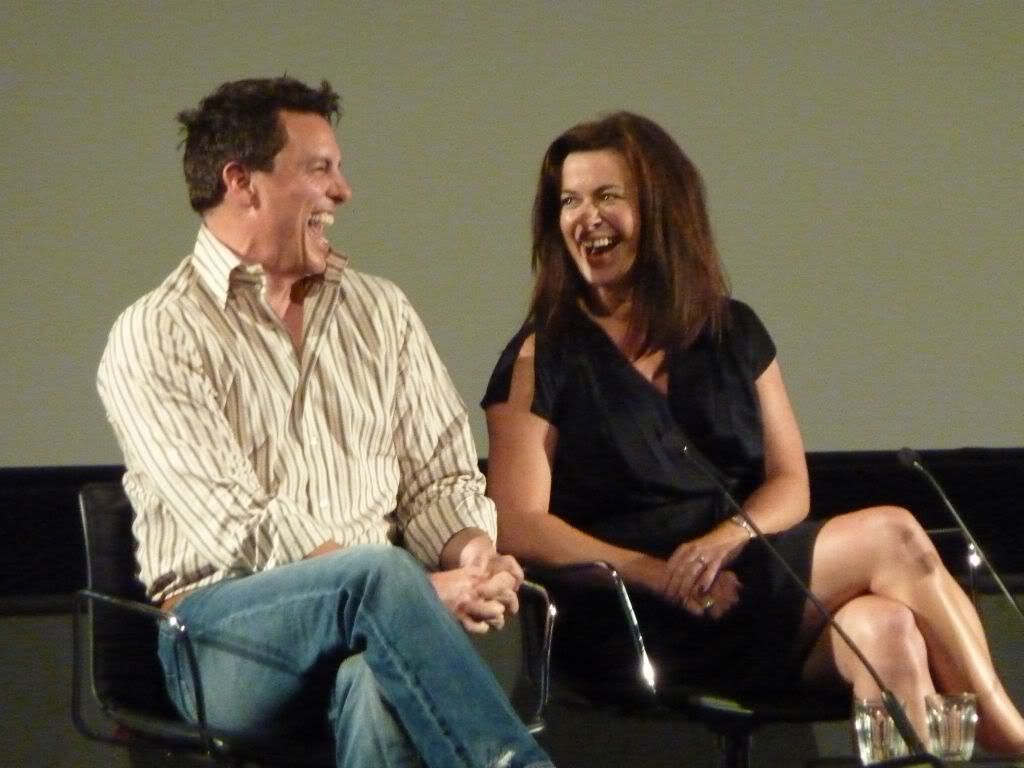
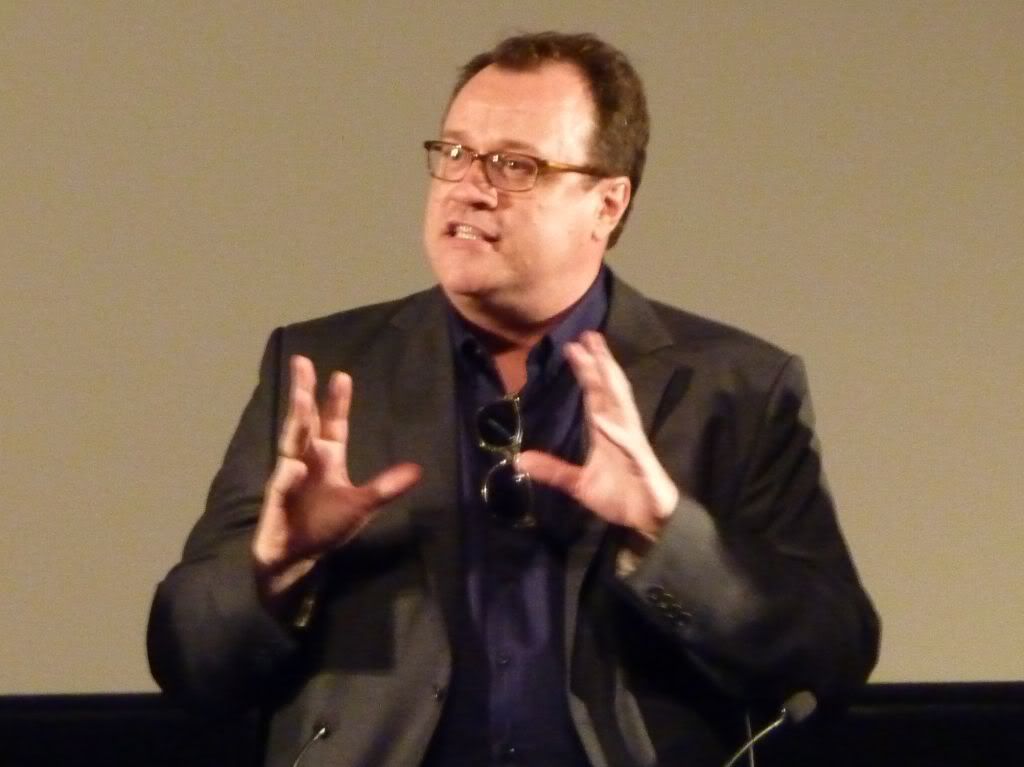
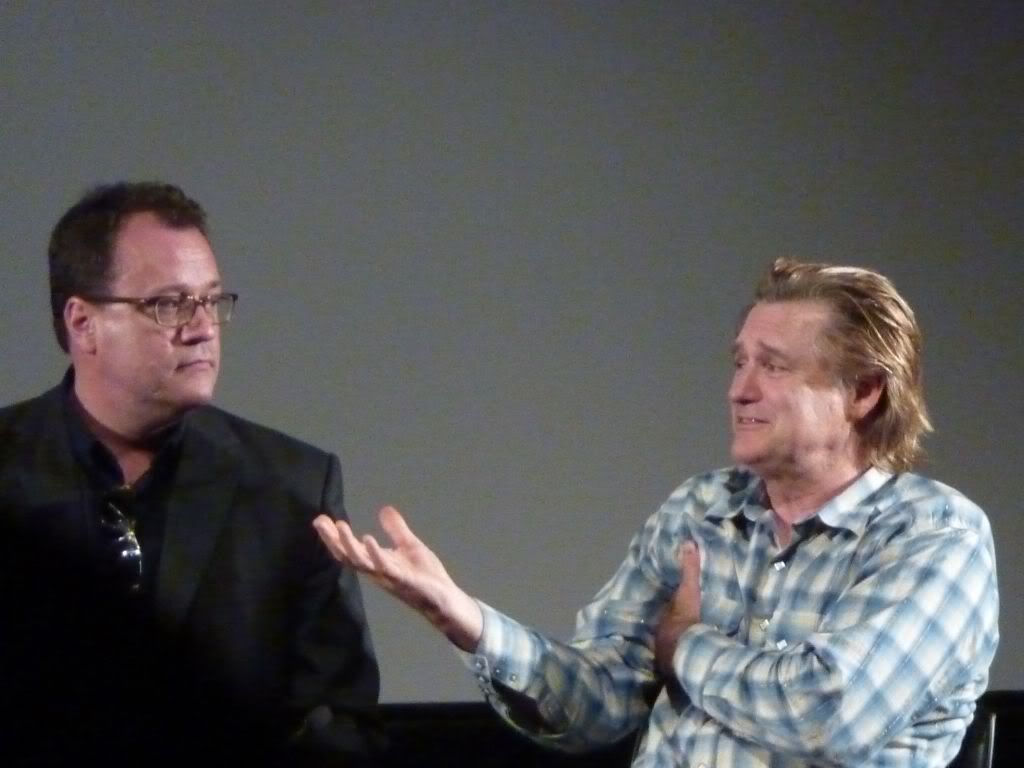
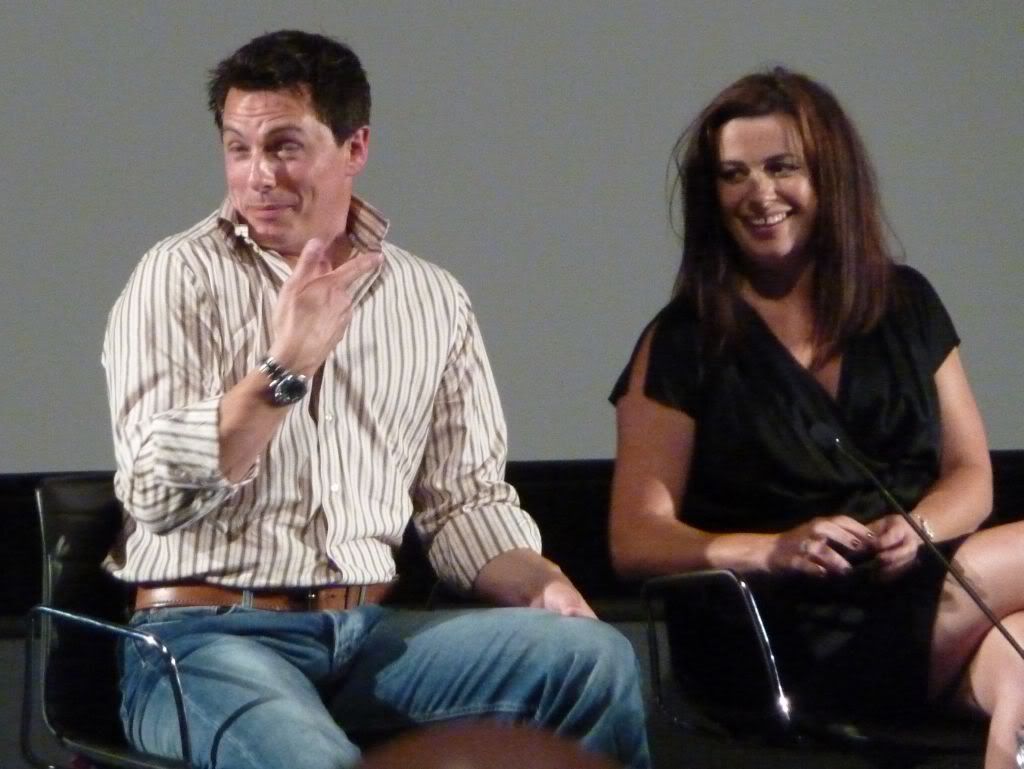
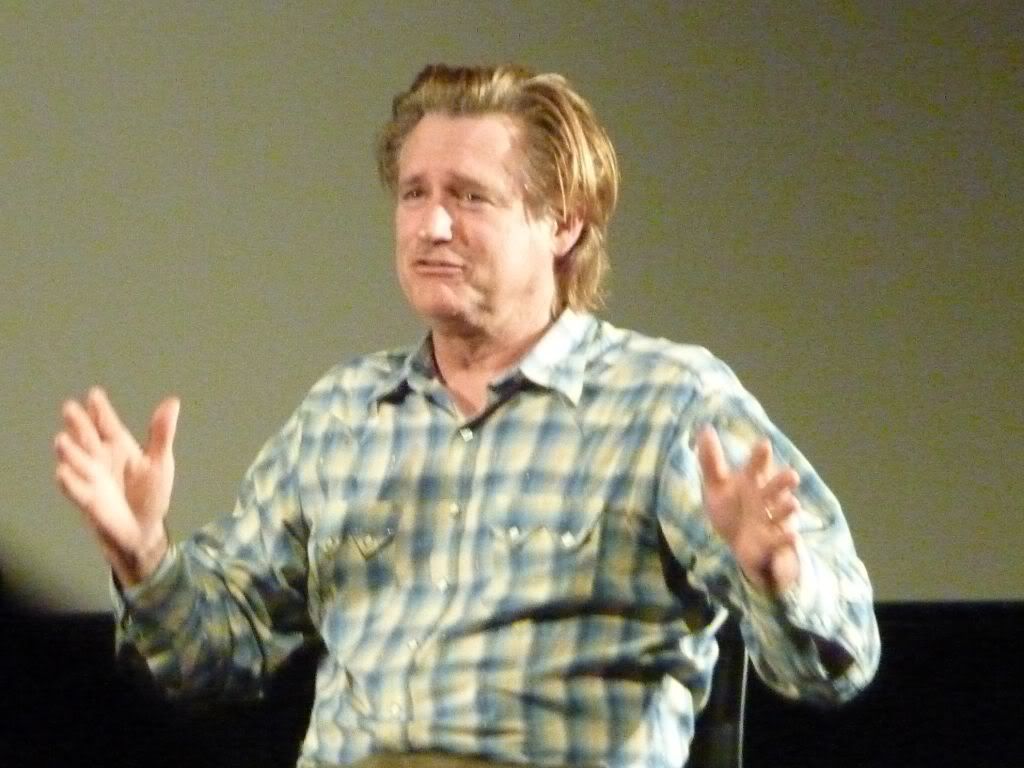
After the episode we were treated to a panel featuring John Barrowman, Eve Myles, Russell T Davies and Bill Pullman, who during the course of the session dipped into how they found filming the series in Los Angeles, how the series and characters have developed, and of course fun and laughter on set (what could you expect from John Barrowman?!!).

It was quite clear from the start that all of the actors found working together to be great fun, not to mention a little mutual admiration between those from the UK and those in the US. Being a self-confessed sci-fi "geek", JB gushed about his crush on BP from Spaceballs and had never expected to work with him at Warner Bros! He was also thrilled to have worked with the likes of Nana Visitor from Deep Space Nine, John De Lancie and Ernie Hudson. BP observed that with the distinguished Welsh cast he knew he was going to work with he was worried that what he termed a "Valley Girl" might be cast on the US-side, but in the end it was a sterling cast and crew all round.

Both JB and EM agreed that part of what they like about Torchwood is how the characters are grounded in reality - they have 'real' personalities, backgrounds and futures, and exhibit the human flaws and foibles. Part of Jack's makeup makes him very similar to Oswald Danes, in that both characters are known to have killed children (though of course in very different circumstances), with JB commenting that makes the two characters finally meeting poignant, both recognising something in the other.

Talking about the relationship between Jack and Gwen, RTD said that there was no romantic relationship between the two characters, and that their friendship comes from the deep respect, trust and affection they have for each other - Gwen has played a fundamental role in keeping Jack "human", and in turn he's been looking out for her family behind the scenes since Torchwood 'vanished'. Of course in reality the two are also firm pals, though John's reknowned capacity for practical jokes 'almost' fractured their friendship when he decided to play a prank of hiding in her shower and jumping out at her after a long early morning shoot, giving her one of the biggest frights of her life.

The cast enjoyed their time on the Warner Bros set in Los Angeles, with the "Hollywood lifestyle" fitting in rather well! With the studio lot so large, travelling about in golf buggies became the norm, though John got his own bicycle, complete with basket to carry his scripts in. Eve was very impressed in the sets they had, especially on how they had faithfully recreated the look of places like Gwen's parents' home (will we be able to spot the difference between the Welsh and Warner Bros versions?!!!).

Commenting on the potential "Americanisation" of the show in future (hopefully!) series, RTD was very frank in saying that should Starz want to continue and the BBC didn't want to co-produce then it could well become a wholly US-centric show; however, he felt that the show's Welsh roots were something that he'd really want to keep if he could. He also heaped praise upon his co-writer Jane Espenson, whose contributions helped bring Miracle Day together. BP revealed earlier in the discussion that upon receiving the scripts for his character it took him less than two days to accept the role based on the quality of writing and the storyline.

Responding to one audience question about the Doctor, RTD made it clear that he should never appear in Torchwood, as that would make children want to watch a show that clearly isn't aimed at them. Characters could move the other way of course, with Jack's origins being in the original show of course, and both Gwen and Ianto had appeared, too (when someone asked about Jack becoming the Face of Boe, RTD wryly pointed out that he wrote that!) JB wouldn't be drawn on whether Jack would be back in Doctor Who though ...

The atmosphere throughout the panel was very upbeat, with everyone on fine form and humourous banter bouncing between themselves. Examples included how RTD joked about BP actually accepting the role as he needed a new kitchen paid for, and EM explaining how JB doesn't like chickens and he responding with a comment about cockerels ...

Conclusion

All-in-all, it looks like the new series of Torchwood is going to be as dramatic as Children of Earth, though whether the plot can sustain itself over twice as many episodes as the former remains to be seen. At least Russell T Davies explained that the storyline is self-contained so we shouldn't end up with a load of potentially unanswered questions at the end of the series like some of the other recently cancelled shows coming out of the States ...

... except of course whether there'll be another series to follow!

Bookmark and Share The Doctor Who Experience

Wednesday, June 08, 2011 - Reviewed by Chuck Foster


Many other photos from my visit can be found on Facebook.
Waking up on a dull-ish Wednesday morning meant two not-so-dull-ish things happening today: firstly, it's my birthday, hoorah; secondly, it's the day we go to the Doctor Who Experience!

Olympia 2 is a strange place; unlike it's massive main companion, the building is a case of "blink and you'd miss it" - only the signs give it away, and then you have security into a plain lift to the second floor ... and suddenly as the doors open you're in a different world!

The key selling attraction of the Doctor Who Experience is, of course, the Experience itself! This takes up the first part of the visit, and is based around a loose script of the Doctor requiring assistance from the audience in order to resolve the problems faced. I'm not going to spoil things here, but essentially you'll meet up with his greatest and his scariest foes, plus the chance to pilot the Eleventh Doctor's TARDIS yourself! (well actually the kids are expected to pilot, but in a small group like ours a big kid like me gets to have a go, too!). There is also a 3D segment that beats the pants off many of the recent films of that style - Pirates of the Caribbean eat your heart out!

The whole experience is perhaps a little disappointingly short in comparison to some attractions you might visit for a similar price range (the London Dungeon comes to mind here), but then of course it isn't the only part of the overall visit, there's the large exhibition to follow, too! Also, its length is comparable to episodes from the original series - your own "Mission to the Unknown", so to speak! However, it is fun and the 'passive' Doctor interaction (as portrayed by Matt Smith) was good, though mayhaps needed a bigger audience than our own group to really work effectively.

Unlike London's other recent exhibition at Earl's Court where you followed a route around the exhibits, here at Olympia 2 it is much more open-plan and you can wander around at your leisure in the order you like. As you exit the Experience you do initially encounter the first ten Doctors in their respective costumes though, surrounding the latest incarnation by the TARDIS. Here you can also get your chance to appear in a (paid) photo within the Pandorica yourself via green-screen.

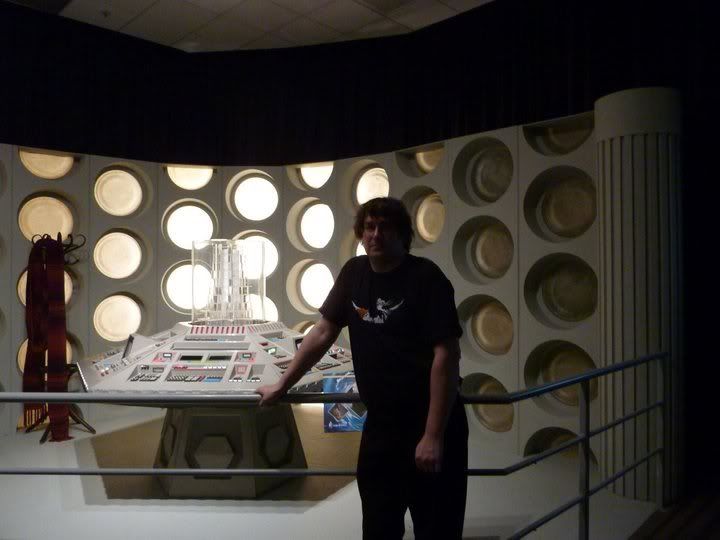
Speaking of the TARDIS, having interacted with the Eleventh's within the Experience, here in the exhibition you'll find both the complete Ninth/Tenth's "coral theme" version and the Fifth/Sixth/Seventh's partial sets, though you can't wander around the consoles, unfortunately. Also lurking in the corner is another TARDIS prop, one of the originals that's almost like an old friend (having had the personal experience of it nearly collapsing on top of me at Panopticons past - eek!).

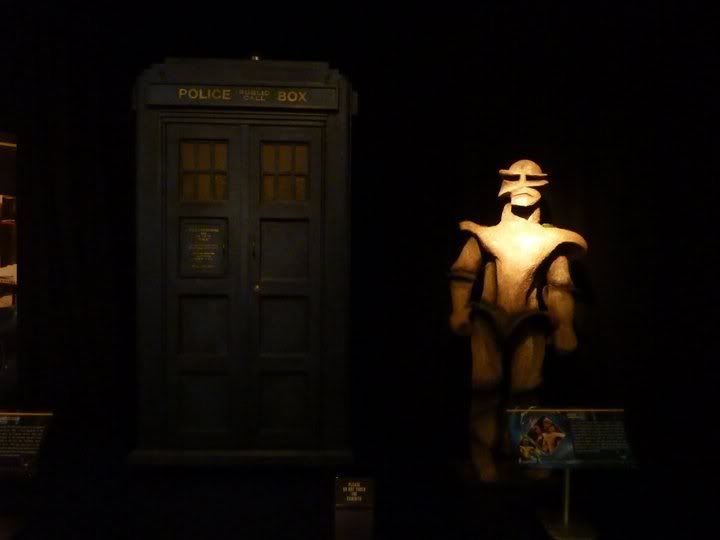
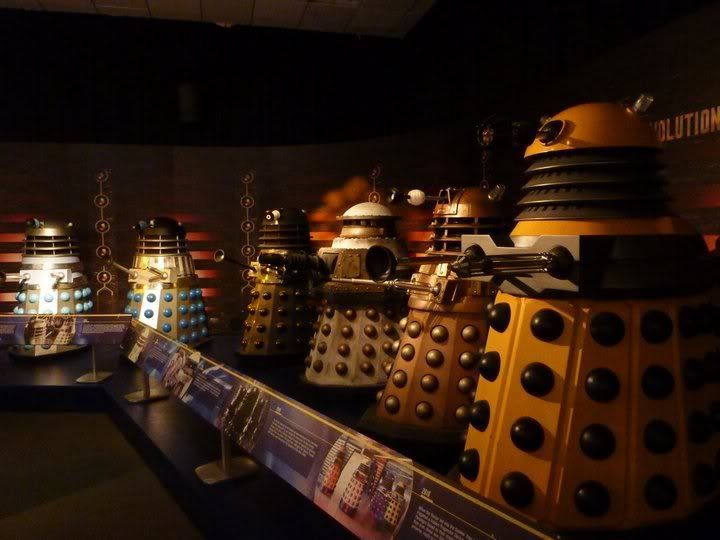
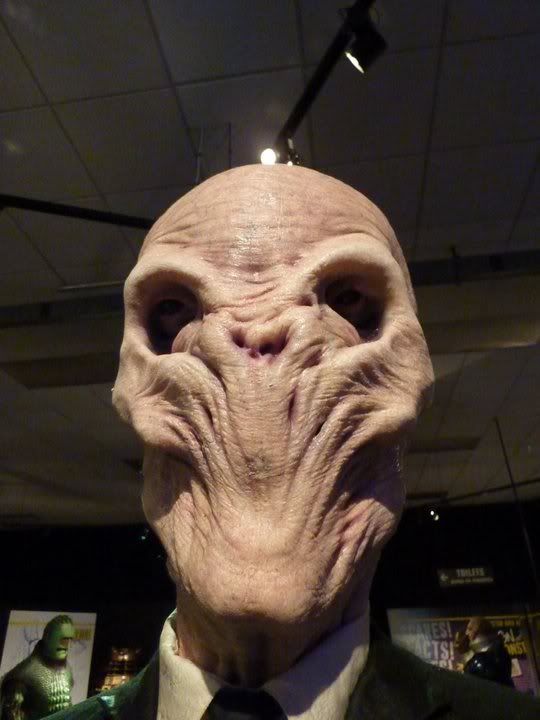
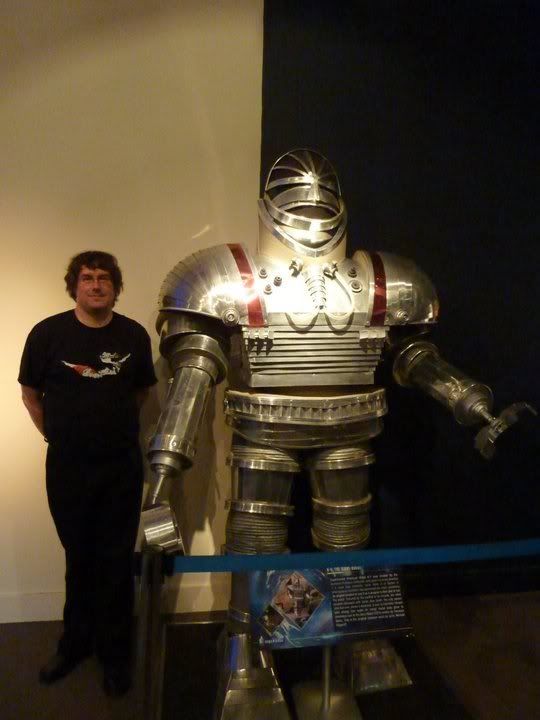
Also on show are a varied collection of companion and monster costumes, including a line-up of cyber-masks through the ages, and a parade of Dalek evolution from their earliest appearance through to the 'chunky' ones from the 2010 series. There isn't that many props from the 20th Century series present, really, but items like the K1 Robot from Robot that tower above you, plus the renovated Ice Warrior and Zygon look really good. Not much from the latest series is present though (or there might have been? I turned away ...)

Other interactive elements include an area where you can learn to walk like the scarecrows from Human Nature/The Family of Blood or stomp like a Cyberman, taught on video by series choreographer Ailsa Berk herself. An obligatory "be a Dalek" prop (which has been around since the MOMI exhibition at the BFI in the early 1990s!). There's also a mock-up of what the BBC Wales art department looks like in all its mayhem.


All in all, you can spend a pleasant hour to hour-and-a-half at the Experience, depending on how much you like to read the information presented with exhibits or watch the video presentations. It's difficult to judge if it is worth the £20 entrance fee with previous exhibitions being half the price, but then the interactive section is fun (and you can see the expense there in places), and there are discounts to be had from various sources - £15 is an average price you can find and that is reasonable in comparison with many of the other London attractions. There is plenty to interest kids and adults alike, though I feel perhaps the former will get more out of the interactive section, and the latter the main exhibition!

Oh, and there's a not-so-little shop!


One amusing incident on the day happened to be in the Experience, as we had a new member of staff accompanying the group to "learn the ropes". At one particularly scary (for the kids you know ...) stage, the long-term member was telling the other all about a certain scary monster and then as they went through a corridor another member of staff leapt out. I think those behind us who didn't see the event must have wondered what that blood curdling scream was all about!